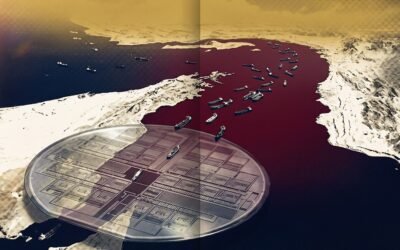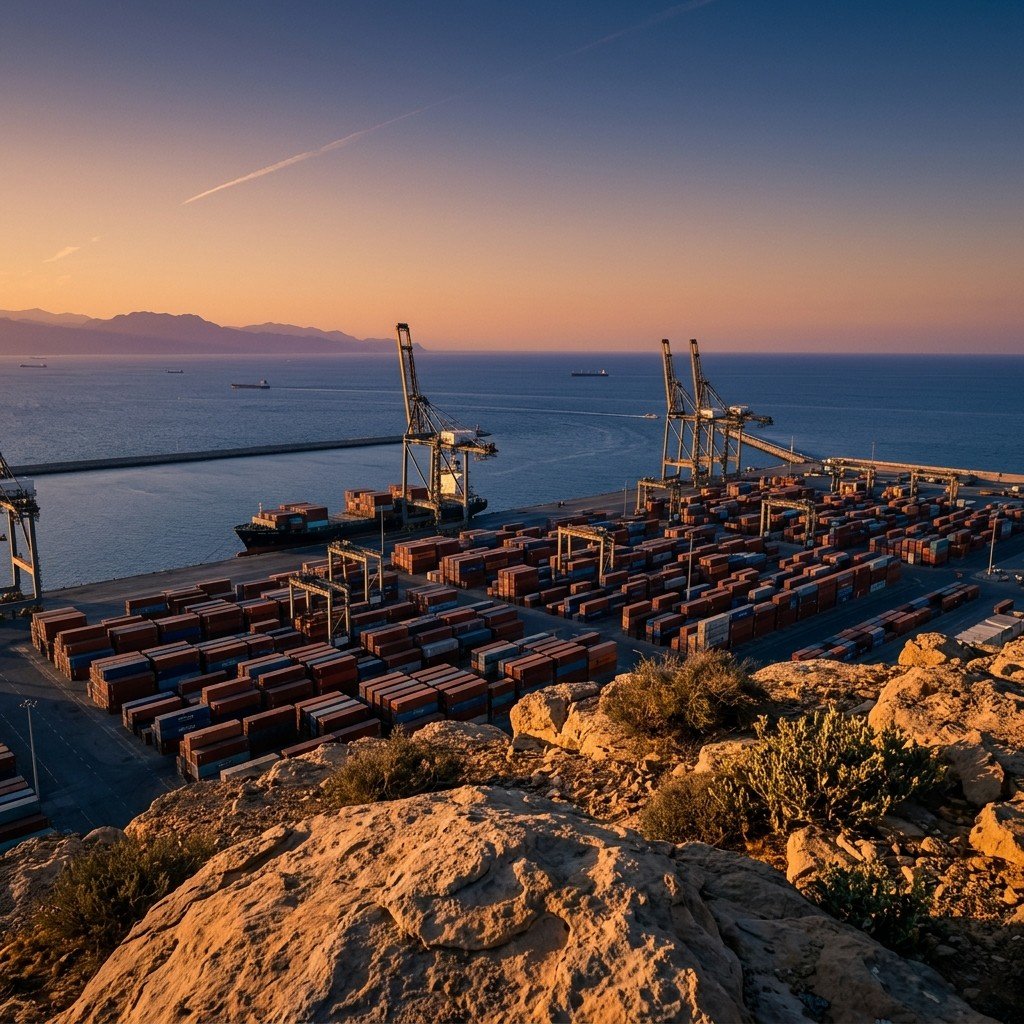
MUSCAT — As maritime disruption rippled through the Strait of Hormuz and the wider region in 2026, Oman found itself in an unfamiliar but increasingly important role: the steady hand. While neighboring shipping lanes faltered and global carriers searched for alternatives, the Sultanate’s ports, free zones, and land routes absorbed the pressure — keeping goods, essential supplies, and travelers moving through a region under strain.
That role did not emerge by accident. It is the outcome of years of logistics investment, geographic advantage, and a foreign-policy posture that has made Oman one of the few regional actors trusted by all sides. In a year defined by disruption, Oman has quietly repositioned itself as a logistics gateway the Gulf cannot easily do without.
A Green Corridor Opens
The most consequential development this year was the activation of the Green Corridor, an integrated land-and-sea route developed in coordination with the United Arab Emirates. The corridor links major Omani ports — including the Port of Sohar and Port Sultan Qaboos — directly into Dubai’s broader logistics network, creating a continuous supply channel that functions even when conventional maritime routes are constrained.
In practical terms, the corridor allows global shipments affected by disruption in the Red Sea and surrounding waterways to be rerouted through Omani territory and cleared onward. Customs procedures have been accelerated. Logistics costs have been reduced. Critical cargo is given priority handling. The result is a corridor designed less for peak efficiency than for continuity — the ability to keep moving when other routes cannot.
|
“Oman’s position has always been geographic. What is new is how deliberately that geography is being activated.” |
Food Security Across the Gulf
Beyond the immediate movement of shipments, Oman has focused on the steady flow of essential goods across the region. The Ministry of Transport, Communications and Information Technology confirmed the full readiness of the land transport sector to move goods from Omani ports to neighboring countries, a capability that matters particularly during periods when other corridors face uncertainty.
Strategic investments in Sohar Freezone and the Duqm Special Economic Zone have transformed these areas into regional supply and storage hubs, with particular emphasis on food and essential commodities. The geography matters: Duqm in particular sits outside the Strait of Hormuz, offering storage and port capacity that remains accessible even when the Strait itself is under pressure.
Beyond Cargo — People, Too
The logistics story extends beyond containers. During recent regional flight disruptions, thousands of passengers transited safely through Omani airports and land borders. Flexible entry procedures and inter-agency coordination allowed travelers to continue journeys that would otherwise have stalled. It is a quieter form of capacity than a cargo corridor, but it runs on the same infrastructure and the same institutional mindset: keep things moving.
The Through-Line
What links the corridor, the free zones, and the air and land movements is less a single strategy than a disposition. Oman has long treated logistics infrastructure as a form of regional service — a way of being useful that translates into resilience when conditions tighten. In 2026, that disposition has become visible in a way it rarely is during calmer periods.
The role is not loud. Oman does not present itself as a logistics superpower, and the country’s diplomatic tradition weighs against triumphalism. But the effect is tangible. A region that was, for stretches of this year, searching for steady ground found some of it along Oman’s coastline, in its free zones, and through its land borders.
That is the quiet shape of infrastructure doing its job: not the grand gesture, but the steady one. And in 2026, it is how Oman has earned a place at the center of how the region actually works.
Reporting compiled by the Omanspire editorial team from official announcements by the Ministry of Transport, Communications and Information Technology, and publicly reported logistics and port activity.
Hassan Al Maqbali
Content Creator & Website Manager at Omanspire
Hassan Al Maqbali is a dedicated content creator and the website manager at Omanspire, where he writes passionately about Oman's culture, history, and the timeless stories that shape the nation’s identity. His work reflects a deep love for the Sultanate and a commitment to sharing its beauty with the world.
Driven by a desire to widen global understanding of Oman, Hassan creates narratives that present the country through diverse perspectives—capturing its people, heritage, landscapes, and evolving cultural heartbeat. Through Omanspire, he hopes to bring readers closer to the spirit of Oman, one story at a time.