In a country better known for oil and frankincense, a quieter but potentially more lasting revolution is under way. Farmers in Dhofar and Buraimi reported record wheat harvests in the 2025–26 growing season. The numbers reflect not just improved yields — but a deliberate, years-in-the-making shift in Oman’s national strategy.
The headline in the 16 April 2026 edition of Oman Daily — “Wheat harvest in Dhofar and Buraimi reflects improved productivity and agricultural expansion” — understates what is actually a strategic milestone. Oman is quietly moving toward meaningful food self-sufficiency in staple grains, a goal that would have seemed aspirational as recently as 2020.
The Numbers That Matter
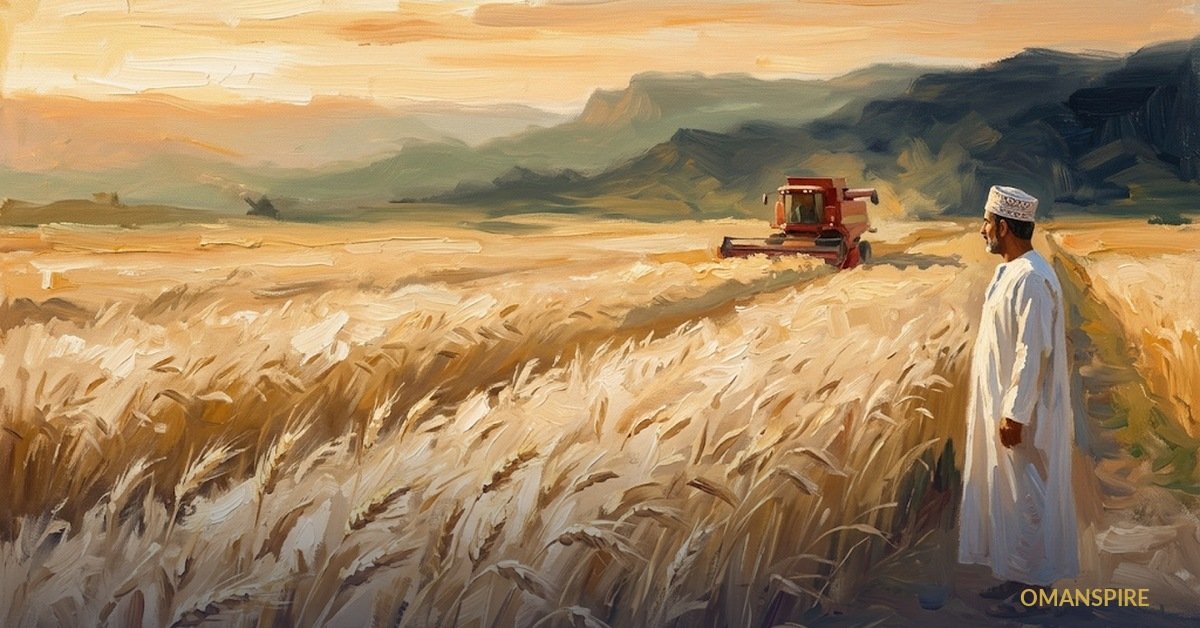
The 2025–26 wheat harvest covered more than 1,200 hectares across Dhofar and Buraimi, with total production up approximately 35% compared to the previous season. Dhofar’s monsoon-influenced microclimate, combined with new irrigation infrastructure installed under the Vision 2040 agricultural programme, has allowed for year-round cultivation of varieties previously considered unsuitable for the Arabian Peninsula’s conditions.
In Buraimi, modern combine harvesters have replaced manual harvesting across the bulk of the cultivated area, driving down per-unit production costs and enabling faster seasonal turnaround. The Ministry has confirmed that this mechanisation push is part of a broader OMR 180 million investment in agricultural modernisation announced in the 2025 national budget.
Oman currently imports roughly 90% of its wheat requirement. Achieving even 20% domestic production would represent a significant buffer against global supply shocks — like those triggered by the Ukraine conflict in 2022–23.
Why This Matters More Than It Looks
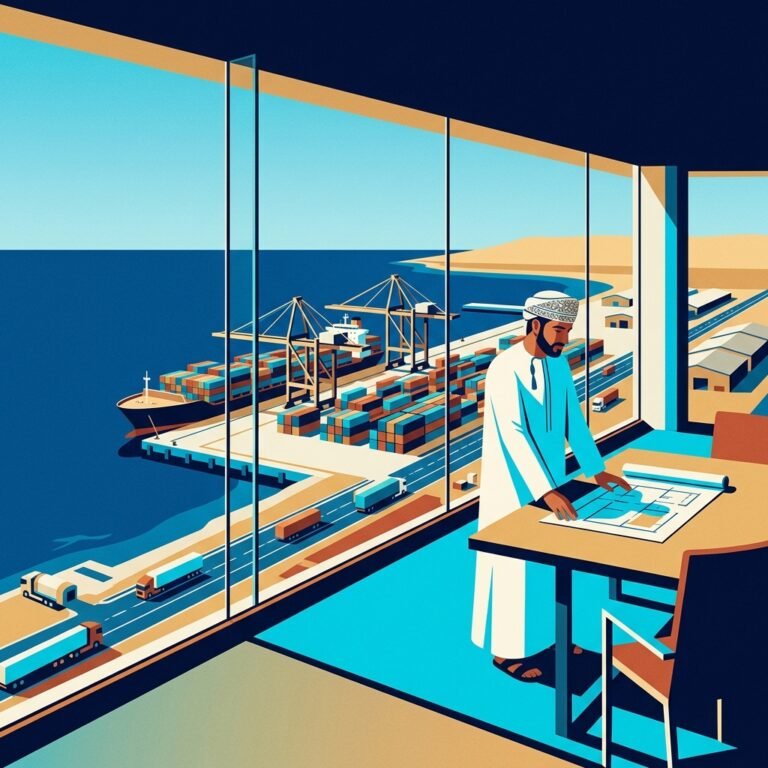
The timing of Oman’s agricultural push is no accident. The global food system remains fragile: Black Sea grain routes face ongoing disruption, and the Hormuz Strait tensions currently making headlines could theoretically affect bulk carrier access to Omani ports. A domestic grain buffer, however modest, is insurance against scenarios that seemed far-fetched five years ago.
The broader food security initiative encompasses more than wheat. The Al-Durra development project in Khabura governorate — a multi-million-rial integrated farming and value-chain complex — is expanding alongside water management infrastructure in South Batinah that the paper describes as “a lifeline” for agricultural expansion. Southern Batinah dams are being cited as foundational to a sustainable agricultural future, reducing reliance on groundwater that has been steadily depleted.
Oman’s National Food Security Strategy, aligned with Vision 2040, targets a 40% reduction in food import dependency for core staples by 2030. The 2025–26 harvest data suggest the country is broadly on track — a rare piece of good news in a week dominated by geopolitical turbulence.
The Story the Paper Missed
The Oman Daily coverage focuses on the harvest itself — yields, geography, mechanisation. What is missing is the human dimension: the farmers who chose to plant wheat on land their fathers used for dates or left fallow. Interview-based reporting on this transformation would reveal the incentive structures — government subsidies, guaranteed purchase schemes, agricultural extension services — that are driving behaviour change at the grassroots level.
Equally absent is the climate adaptation angle. Oman’s agricultural planners are not simply copying existing farming models — they are engineering micro-climates, selecting heat-tolerant and drought-resistant varieties, and trialling precision irrigation at scales that could serve as a model for other Gulf states facing identical food security pressures.
Looking Ahead
The Ministry of Agriculture has signalled its intention to expand the cultivated wheat area by a further 25% in the 2026–27 season. Analysts suggest that if production targets are met, Oman could reach 15% domestic wheat sufficiency within three years — a figure that would meaningfully reduce the country’s exposure to global commodity price volatility.
For a nation whose economic future is increasingly tied to tourism, logistics, and renewable energy — all of which benefit from regional stability and a reputation for self-reliance — the wheat harvest is more than an agricultural story.
It is a signal of national intent.
Source: Oman Daily, 16 April 2026. Featured illustration generated with AI for Omanspire.
Organization Design Expert in the Oil & Gas sector, with a passion for visual storytelling and creative content. Alongside his professional work in organization design, he is a skilled videographer and visual content creator, combining strategic thinking with a strong eye for compelling visuals.