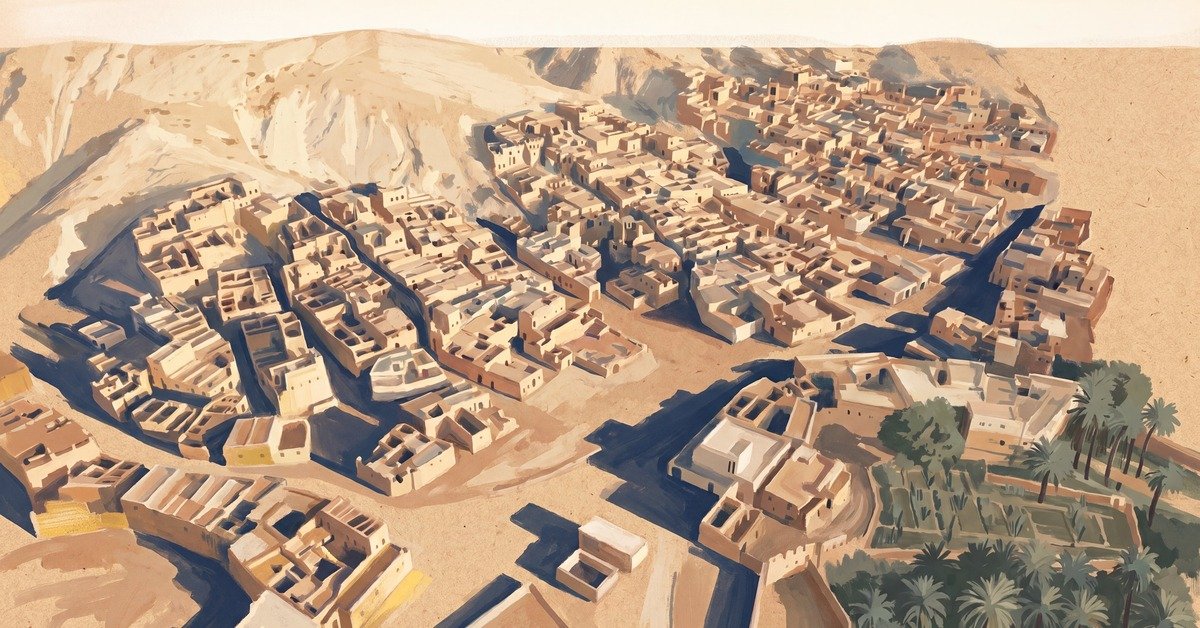
A quiet item from Ibri in yesterday’s paper deserves more attention than it got. Walid Al Ghafri at the Department of Heritage and Tourism in Dhahirah announced that one million Omani rials is going into restoring Harat Al Raml — the historic mudbrick quarter in the wilayat. The plan: heritage inns, a museum, a traditional crafts market for productive families, a restaurant, a traditional café, a public square. The estimate is 55 direct jobs and over 200,000 visitors a year once it’s running.
Oman has seen many of these announcements before. Some have worked beautifully. Some have turned into expensive empty courtyards that nobody visits twice. The difference between the two outcomes has very little to do with the size of the budget.
The harat that come back to life are the ones where you can buy something, eat something, sit somewhere — and the people running it are from there. Silver-smiths, weavers, women selling halwa they made that morning, a small café where men sit with their khanjars on the table and talk about whose grandfather built which house. That is what makes a harat feel alive, not the photos on the walls.
The ones that don’t work are the ones where everything has been smoothed over too perfectly. The mud walls get a too-clean finish, the doors are replaced with mass-produced replicas, the museum has more security guards than visitors, and the café charges Muscat hotel prices. The local families don’t come, the young people don’t come, and after a year the harat becomes a stop on a tour bus route and not much else.
| The phrase “productive families” — in Omani policy language — refers to home-based workshops, mostly women, who already make sweets, weave, sew, and do incense work. If those women genuinely get the stalls and a real cut of the revenue, this becomes something different from another heritage display. |
Between the lines of the announcement, there is reason to be encouraged. Fifty-five jobs is a real number. Two hundred thousand visitors is ambitious but plausible if the project is done well.
Ibri itself is well-placed. It sits between Muscat and Buraimi, between Nizwa and the UAE border. People drive through. They stop at fuel stations and at most a falaj viewpoint. A restored harat with somewhere to actually eat and shop adds a reason to slow down.
The real test is what happens on a Tuesday afternoon in 2028
The real test will come in two years. Not at the opening — openings are easy. The opening will have ribbons and cameras and a minister, and everyone will say it’s beautiful. The test is what the place looks like on a regular Tuesday afternoon in 2028. Whether people are sitting in the café. Whether kids are running through the square. Whether the silver being hammered somewhere down the alley.
Oman has plenty of heritage that nobody has restored yet. Forts, harat, old mosques, falaj systems. There is real budget pressure on which ones get picked, and Harat Al Raml getting a million rials means it jumped past a lot of other candidates. The model has to work — both because Ibri deserves it, and because if it works, the model travels. The next harat gets restored on the same logic. The next governorate sees what’s possible.
The opening will come. What matters is what happens after.
Source: Oman Daily