![[history] Stone of Memory: Why Salut’s Iron Age Citadel Belongs to the World](https://omanspire.om/wp-content/uploads/2026/09/history-stone-of-memory-why-saluts-iron-age-citadel-belongs-to-the-world.jpg)
Stone of Memory: Why Salut’s Iron Age Citadel Belongs to the World
Out in the open plains of Bahla, where the gravel flats of Al Dakhiliyah stretch toward the desert, the ground rises into a terraced hill of dark stone. This is Salut. To anyone standing atop its dry-stacked masonry in the cool early light, the site feels less like a quiet ruin and more like an ongoing conversation across millennia.
The Engineering of Survival
When you walk around the base of the citadel, what strikes you is not sheer monumentality for the sake of display, but precision born of necessity. Salut, linked closely with neighboring Bisyah, preserves an unbroken arc of human settlement stretching from the Early Bronze Age through the Iron Age and well into the Islamic era.
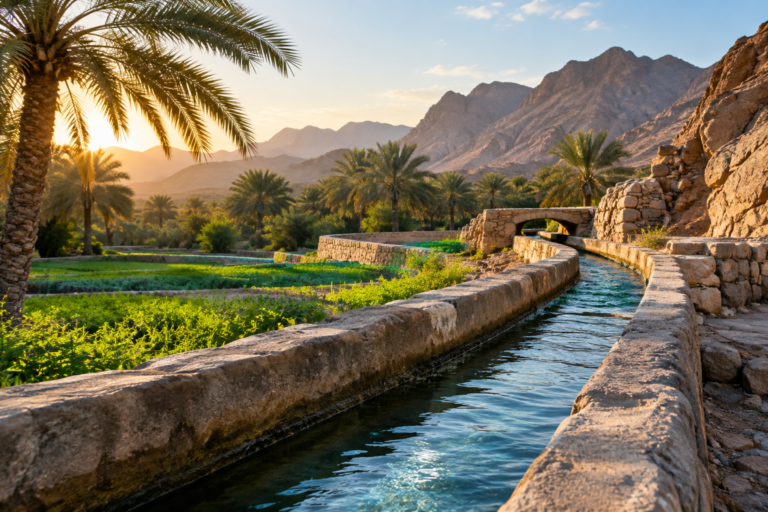
Excavations have revealed massive stone fortifications, ritual platforms, and evidence of copper smelting that plugged the interior of Oman into ancient trade routes across the Arabian Sea and Mesopotamia. Yet the real triumph of Salut lies underground. The site holds some of the earliest documented evidence of falaj irrigation systems in the region—stone-lined subterranean channels engineered to capture seasonal runoff from the foothills and feed date palm groves in an arid landscape.
Beyond Broken Pottery
Too often, archaeological sites are reduced to cold inventories of pottery shards, bronze daggers, and carbon dates. At Salut, however, the stones speak of social contracts. Constructing terraced battlements and cutting water channels through solid bedrock required hundreds of people working in deep coordination across generations.
Ibtisam bint Abdullah Al Maamari, Director of World Heritage at the Ministry of Heritage and Tourism, explains that preparing the nomination file is about documenting this outstanding universal value while creating a sustainable framework for the future. The initiative pairs international preservation with local vitality, ensuring that modern visitor facilities allow the surrounding community to actively share in managing and benefiting from the site.
A Living Heritage in Bahla
Standing on the summit of Salut as the evening shadows lengthen across the gravel plains, you look out over date palms that still depend on ancient waterways. In Bahla, the past is never distant; it sits beside you in the mud-brick quarters, the heat of the pottery kilns, and the quiet flow of the falaj.
Bringing Salut to the UNESCO World Heritage List is not merely about gaining a prestigious international title. It is an act of gratitude toward the early builders who taught this land how to gather water, foster communities, and outlast the desert sun.