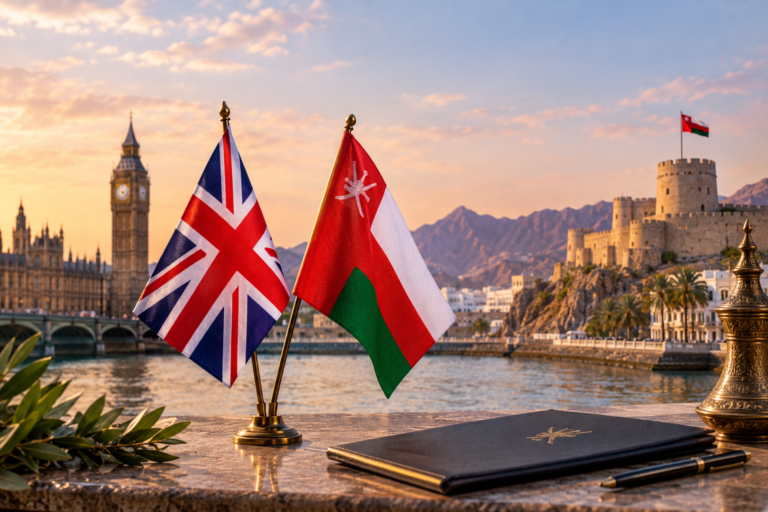
Oman and the United Kingdom: From Centuries of Diplomacy and Historic Friendship to a Strategic Partnership in Knowledge, Industry and Technology
By Waleed Al Maskari | Article 2026 | Historical, Political and Strategic Analysis | 23 October 2026
Introduction: A State Visit Beyond Diplomatic Ceremony
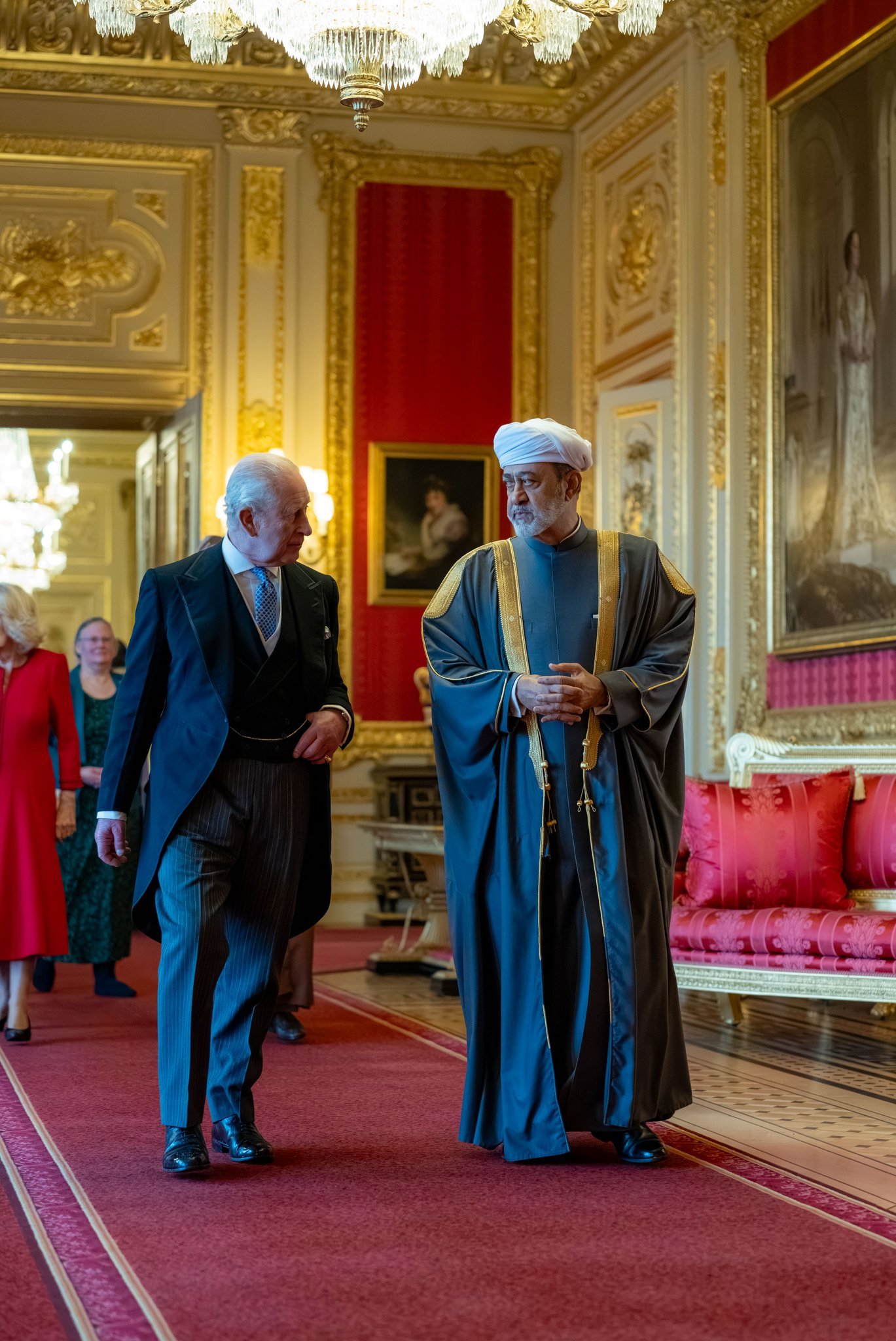
The State Visit of His Majesty Sultan Haitham bin Tarik, Sultan of Oman, to the United Kingdom in October 2026 represents a significant historical and strategic milestone in the evolution of Omani–British relations.
The visit was important not merely because of its diplomatic symbolism and the longstanding friendship between the two nations, but also because of the agreements, understandings and initiatives aimed at establishing a more comprehensive and sustainable partnership.
Undertaken at the gracious invitation of His Majesty King Charles III, the visit reaffirmed the deep historical ties between the two countries and their respective royal families.
It also carried particular historical significance as the first State Visit by an Omani Sultan to the United Kingdom since 1982, when the late Sultan Qaboos bin Said was received by Her Majesty Queen Elizabeth II.
However, the importance of this visit extends far beyond historical remembrance. Its significance lies in its potential to transform longstanding bilateral relations into practical partnerships encompassing investment, defence, maritime security, artificial intelligence, advanced industries, education, space technology and environmental sustainability.
The joint statement issued at the conclusion of the visit reaffirmed that relations between Oman and the United Kingdom are founded upon an enduring historical friendship, renewed mutual trust and a shared ambition to develop a partnership serving the interests of both nations.
This vision also aligns with Oman Vision 2040 and the United Kingdom’s priorities for economic growth, innovation and international cooperation.
1. Historical Foundations of Omani–British Relations
Relations between the Sultanate of Oman and the United Kingdom are among the historically significant bilateral relationships linking the Arabian Peninsula with Europe.
Commercial and maritime exchanges between Oman and Britain developed over several centuries, reflecting Oman’s strategic geographical position and its longstanding role in trade across the Indian Ocean, the Arabian Gulf and East Africa.
Historical records document contacts involving the English East India Company during the seventeenth century. An agreement associated with 1647 and subsequent treaties concluded in 1798 and 1800 became important milestones in the formalisation of relations.
These early interactions reflected the importance of Oman’s ports and maritime networks, as well as Britain’s expanding commercial and political interests in the region.
A balanced historical assessment must recognise that these relations evolved through periods of cooperation, competition, changing geopolitical interests and unequal international power structures.
The significance of the relationship lies not in an absence of differences, but in the ability of successive generations to preserve communication and develop shared interests despite changing political circumstances.
Following the beginning of Oman’s modern renaissance in 1970 under the late Sultan Qaboos bin Said, bilateral cooperation expanded into defence, education, healthcare, infrastructure, investment, culture and institutional development.
Today, this historical foundation provides an important basis for understanding the strategic partnership between the two countries.
2. His Majesty Sultan Haitham bin Tarik’s Address in the City of London: Economic Confidence and the Future of Partnership
One of the important moments of the State Visit was the address delivered by His Majesty Sultan Haitham bin Tarik during the official dinner hosted by the Lord Mayor of the City of London.
His Majesty highlighted London’s international standing as a centre of commerce, ideas, cultural exchange, enterprise and innovation.
The address conveyed a broader understanding of economic success, emphasising that the enduring value of a major international city lies not solely in its financial influence, but also in its ability to inspire ideas, develop strategies and create lasting relationships.
Three principal themes emerge from His Majesty’s remarks.
Economic confidence and stability. His Majesty underscored the importance of stable markets, transparent and adaptable regulatory systems, realistic investment strategies and clear economic objectives.
Investment and private-sector cooperation. His Majesty welcomed opportunities for deeper collaboration in sustainability, financial services, technology, real estate, smart cities and economic zones.
Historical continuity and future development. By referring to the historic treaties of 1798 and 1800 and the commercial exchanges that preceded them, His Majesty placed contemporary economic cooperation within the wider history of Omani–British relations.
From a political and economic perspective, the address reflected Oman’s commitment to economic diplomacy as an instrument for national development.
Modern diplomacy increasingly involves more than government-to-government engagement. Private enterprises, investment institutions, research centres, universities and technology companies have become essential participants in international relations.
His Majesty’s message therefore presented a vision of partnership in which historical trust supports economic diversification, innovation and sustainable growth.
3. The British Omani Society: Fifty Years of Building Bridges Between Nations
The golden-jubilee celebration of the British Omani Society, held at Lancaster House in London on 21 October 2026, marked an important milestone in the relationship between Oman and the United Kingdom.
The occasion demonstrated that successful international relations are sustained not only through political agreements and economic cooperation, but also through cultural understanding, educational exchange and personal relationships.
His Highness Sayyid Theyazin bin Haitham Al Said, Deputy Prime Minister for Economic Affairs, attended the celebration and commended the Society’s longstanding contribution to strengthening bilateral relations.
The announcement of joint honorary patronage by His Highness Sayyid Theyazin bin Haitham Al Said and His Royal Highness Prince William, Prince of Wales, added particular significance to the occasion.
This development symbolises a commitment to preserving the relationship across generations and provides an opportunity to strengthen cooperation through younger leadership.
Over five decades, the British Omani Society has contributed to cultural exchange, educational initiatives, professional connections and mutual understanding between the peoples of both nations.
Its future role could become increasingly important in connecting universities, research institutions, entrepreneurs, cultural organisations and young professionals.
From the perspective of international relations, such institutions represent an important dimension of soft power and people-to-people diplomacy.
They help create networks of trust that continue beyond changes in government, economic conditions and political priorities.
The Society’s golden jubilee therefore represents more than an anniversary. It provides an opportunity to redefine its future role as a bridge between the next generations of Oman and the United Kingdom.
4. The Smart Industries Initiative: From Traditional Trade to Technology Transfer
One of the notable themes associated with the British Omani Society’s anniversary was the Smart Industries Initiative, launched in 2025 with the Society’s support.
The initiative seeks to facilitate the exchange of technological expertise and strengthen cooperation between industrial and research institutions in Oman and the United Kingdom.
Its broader importance lies in the potential transition from traditional commercial exchange to knowledge-based industrial cooperation.
Technology transfer should not be understood simply as purchasing advanced machinery or importing sophisticated systems.
Its sustainable value depends on developing technical expertise, strengthening local research capabilities, improving industrial processes and enabling national institutions to adapt and develop technologies independently.
Potential areas of cooperation include industrial automation, artificial intelligence, advanced manufacturing, energy efficiency, innovative materials and low-carbon industrial production.
These fields are closely aligned with Oman Vision 2040, particularly its objectives concerning economic diversification, productivity, innovation and the development of high-value industries.
However, the ultimate success of such initiatives should be evaluated through measurable outcomes, including completed projects, workforce training, industrial applications, research partnerships and the development of local technological capabilities.
5. The Return of Chevening Scholarships: Investing in People and Future Leadership
The announced return of Chevening Scholarships to Oman represents one of the most significant educational developments associated with the October 2026 State Visit.
Established in 1983, Chevening is the United Kingdom government’s international scholarship programme, designed to support postgraduate education and develop relationships with emerging professionals and future leaders.
The programme has created a global network of graduates working in government, business, academia, international organisations and civil society.
Chevening Scholarships generally support eligible one-year master’s degree programmes in the United Kingdom, subject to the programme’s official eligibility requirements and funding conditions.
Oman participated in Chevening during earlier stages of the programme, and a relaunch was announced in 2015 in cooperation with British businesses.
During the October 2026 State Visit, the British government announced the programme’s return to Oman, with applications expected to open in August 2027.
The number of scholarships and complete Oman-specific eligibility conditions were not specified in the announcement referenced in this article.
The significance of Chevening extends beyond academic qualifications.
It offers opportunities for Omani professionals to acquire advanced knowledge, experience international academic environments and develop networks that may support their future contributions to national institutions.
Fields such as international relations, public policy, economics, management, technology, environmental sustainability and other eligible disciplines may be particularly relevant to Oman’s development priorities.
From a national development perspective, the true value of international scholarships is realised when graduates translate their education into institutional improvements, effective policies, innovative projects and sustainable economic contributions.
The return of Chevening therefore represents an investment in human capital and the future leadership capabilities of Oman.
6. Downing Street and the Expansion of Economic Cooperation
The meeting between His Majesty Sultan Haitham bin Tarik and the British Prime Minister at Downing Street formed an important part of the State Visit’s executive and economic agenda.
The discussions reinforced the importance of cooperation in security, defence, trade, investment, technology and education.
The British government announced new investments exceeding £1 billion as part of a wider package of initiatives intended to strengthen economic growth and create opportunities in both countries.
Among the announced developments was a proposed large-scale artificial intelligence data-centre project in Salalah involving Yamna, with the first phase expected to exceed £1 billion in value.
The British government also highlighted the sovereign investment partnership established in 2022 and referred to approximately £1.7 billion in Omani investment in the United Kingdom under that framework.
These developments illustrate a gradual transformation in the economic relationship.
Traditional bilateral trade is increasingly being complemented by joint investment, digital infrastructure, advanced technology and strategic industrial projects.
Nevertheless, it is important to distinguish between announced investments, proposed agreements, committed financing and projects that have already been completed.
The long-term economic significance of these initiatives will depend on their implementation, commercial sustainability and measurable contributions to employment, productivity and economic diversification.
7. Preserving the Historical Record and Shared Institutional Memory
Historical archives and official records play an essential role in understanding the development of Omani–British relations.
Oman’s National Records and Archives Authority has contributed to the preservation and study of the Sultanate’s diplomatic history through publications, exhibitions, conferences and documentary research.
Historical correspondence, political agreements, maritime records and commercial documents provide valuable evidence of how relations evolved across different centuries.
They also help researchers examine international competition, regional political developments and the changing nature of bilateral interests.
Expanding cooperation between Omani and British archival institutions could support new historical studies, academic publications and educational initiatives.
Such collaboration would encourage a deeper understanding of the relationship based on documented evidence rather than ceremonial narratives alone.
Preserving shared historical memory is therefore an important component of cultural diplomacy and international academic cooperation.
8. Strategic Implications and Future Challenges
The developments associated with the October 2026 State Visit indicate that Omani–British relations are entering a more diversified phase.
Defence cooperation provides an established framework for strategic dialogue and institutional trust.
Investment partnerships can support economic diversification and the development of new industries.
Educational initiatives can strengthen human capital, while technology transfer and research cooperation may contribute to productivity and innovation.
Cultural institutions and youth programmes can also create lasting relationships between the peoples of both countries.
However, the success of this expanding partnership will depend on several factors.
First, cooperation must be supported by clearly defined implementation priorities and measurable objectives.
Second, Omani businesses, research institutions and professionals should have meaningful opportunities to participate in the resulting projects.
Third, the development of national expertise must remain a central priority, particularly in complex technological and industrial sectors.
Finally, bilateral cooperation should remain resilient in the face of changing international economic and political conditions.
The strength of the partnership should therefore be measured not simply by the number of official visits or memoranda of understanding, but by the practical outcomes they generate.
9. The Oman–United Kingdom Joint Statement: A Roadmap for a Renewed Strategic Partnership
The joint statement issued on 23 October 2026 represents one of the most important political and strategic outcomes of His Majesty Sultan Haitham bin Tarik’s State Visit.
It moved beyond the reaffirmation of historical friendship to identify specific areas of cooperation in defence, security, economic investment, advanced technology, environmental sustainability, regional stability, education and cultural relations.
The statement also reaffirmed the importance of the 2019 Agreement of Enduring Friendship and bilateral cooperation, together with the defence relationship established under the agreements concluded that year.
Importantly, both governments expressed their commitment to following up on the agreed priorities, ensuring that diplomatic understandings are translated into practical cooperation.
9.1 Defence and Security Cooperation: Modernising Capabilities and Strengthening National Resilience
The joint statement reaffirmed the central importance of the defence partnership between Oman and the United Kingdom.
Both sides emphasised mutual trust, military cooperation, defence-industrial development, the exchange of expertise and the importance of innovation in preparing for future security challenges.
The statement also welcomed ongoing preparations for Exercise Saif Sareea IV and recognised opportunities for continued cooperation through military exercises, defence testing and capability development.
This partnership builds upon longstanding institutional relations between the armed forces of both countries.
However, its significance is evolving as the nature of security threats becomes increasingly complex.
National security now extends beyond conventional military capabilities to include cybersecurity, information protection, maritime security, critical infrastructure resilience and institutional preparedness.
Strategic analysis: The renewed emphasis on defence cooperation suggests an effort to integrate traditional military training with technological innovation, institutional resilience and future capability development.
Nevertheless, expanded defence cooperation should not automatically be interpreted as the establishment of a new military alliance.
The statement primarily concerns the development of an existing strategic relationship and does not, by itself, demonstrate a fundamental change in Oman’s independent foreign-policy approach.
9.2 Economic Partnership: Sovereign Investment and Future Industries
The joint statement highlighted the importance of completing the necessary steps towards the anticipated free trade agreement between the United Kingdom and the Gulf Cooperation Council.
Both countries also recognised the role of strategic investment cooperation in supporting innovation, industrial development and long-term economic growth.
The Omani–British sovereign investment partnership provides an important mechanism for strengthening cooperation between the Oman Investment Authority and the United Kingdom’s investment institutions.
Priority areas include clean energy, advanced technologies, critical minerals, space-related industries, financing for growing businesses, industrial clusters and regional connectivity.
These sectors are particularly relevant to Oman’s economic diversification objectives.
Economic analysis: Such cooperation could help Oman strengthen its position as a regional centre for investment, advanced manufacturing and technological innovation.
However, the greatest national benefit will depend on effective knowledge transfer, the development of local supply chains and the creation of high-value employment opportunities.
9.3 UK Export Finance: Increasing Available Support to £7 Billion
One of the most notable economic announcements concerned the decision by UK Export Finance to increase its available financing capacity for Oman.
The statement indicated that the financing ceiling would rise by £1.6 billion, bringing the total available capacity to £7 billion.
This development could facilitate major projects involving British goods, services, expertise and industrial capabilities.
It may also create opportunities for cooperation in infrastructure, energy, manufacturing and advanced technologies.
However, the distinction between financing capacity and actual investment is essential.
The £7 billion figure represents an available financing ceiling rather than money already disbursed or projects already completed.
Its practical impact will depend on project eligibility, financing conditions, commercial viability and the ability of participating institutions to develop bankable projects.
9.4 Artificial Intelligence and Space: Building a Knowledge-Based Partnership
The joint statement identified artificial intelligence, data centres, critical minerals and space technology as important areas for future cooperation.
It also welcomed an agreement between Oman’s National Space Programme and the UK Space Agency to exchange expertise and explore opportunities relating to spacecraft launches and commercial space activities.
This cooperation reflects the increasing importance of the space sector in the global economy.
Space technology now supports telecommunications, satellite services, environmental monitoring, remote sensing, navigation and digital infrastructure.
Similarly, artificial intelligence offers opportunities to improve industrial processes, logistics, education, public services and data-driven decision-making.
Future outlook: Cooperation in these sectors could support Oman’s ambition to develop a more advanced technological ecosystem.
To achieve sustainable results, however, investment in research, specialised education and national technical capabilities will be essential.
9.5 Green Growth and Environmental Sustainability
Both countries reaffirmed their commitment to achieving net-zero carbon emissions by 2050 and strengthening cooperation in clean energy, sustainable industries and emissions reduction.
The joint statement highlighted opportunities for cooperation involving Oman’s Net Zero Centre and British institutions, including Net Zero Industry Wales.
Areas of potential collaboration include knowledge exchange, renewable energy, industrial decarbonisation and partnerships between universities and businesses.
The British side also welcomed the possibility of an Omani delegation promoting green-growth opportunities in 2027.
These developments are significant because environmental sustainability has become increasingly connected to global investment, industrial competitiveness and economic security.
For Oman, cooperation in renewable energy, green hydrogen and low-carbon industries could contribute to long-term diversification.
The challenge will be to translate these opportunities into commercially sustainable projects that deliver environmental and economic benefits.
9.6 The Strait of Hormuz: Omani Sovereignty and International Maritime Security
One of the most strategically significant elements of the joint statement concerned the Strait of Hormuz.
Both sides reaffirmed Oman’s sovereignty over its waters in the Strait and emphasised the importance of freedom of navigation and secure maritime passage in accordance with international law, including the United Nations Convention on the Law of the Sea.
The Strait of Hormuz occupies a critical position in international maritime trade and global energy transportation.
Its security is therefore directly connected to regional stability and the functioning of the international economy.
Political analysis: The inclusion of the Strait of Hormuz in the joint statement reflects the importance both governments attach to maritime security, international legal principles and the protection of commercial navigation.
It also highlights Oman’s geographical and diplomatic significance in the region.
The statement should be understood as a reaffirmation of existing sovereignty and legal principles rather than the creation of new sovereign rights.
9.7 Regional Stability and the Palestinian Question
The joint statement reaffirmed the commitment of Oman and the United Kingdom to dialogue, peace and peaceful conflict resolution in the Middle East.
Both countries emphasised cooperation in conflict prevention, humanitarian engagement and multilateral diplomacy.
They also reaffirmed their commitment to a two-state solution as the basis for achieving a just and lasting peace between Israelis and Palestinians.
These positions reflect areas of diplomatic convergence, while recognising that the two countries maintain their own foreign-policy priorities and international responsibilities.
Oman’s foreign policy has traditionally emphasised dialogue, mediation, respect for sovereignty and peaceful dispute resolution.
The United Kingdom, meanwhile, maintains extensive international diplomatic, security and economic relationships.
Cooperation between the two countries may therefore contribute to broader diplomatic efforts supporting regional stability.
The statement also welcomed further cooperation between Oman’s Diplomatic Academy and the United Kingdom’s diplomatic training institutions.
Such cooperation could strengthen professional development in diplomacy, negotiation, political analysis and international engagement.
9.8 Education, Artificial Intelligence and National Capacity Building
Education was another important component of the joint statement.
In addition to the return of Chevening Scholarships, both sides welcomed a British Council pilot project exploring the responsible use of artificial intelligence to support education in Omani schools.
The statement also referred to scholarship and academic cooperation involving Oman’s Net Zero Centre and Cardiff University.
These initiatives may contribute to the development of specialised skills, research capabilities and professional qualifications.
However, the use of artificial intelligence in education requires careful consideration of data protection, teaching quality, digital access and the preparation of educators.
The long-term objective should be to use technology to strengthen learning outcomes and develop national expertise rather than simply introduce new digital tools.
9.9 Cultural Relations and the Next Generation
The joint statement recognised that Omani–British relations have been shaped by generations of sailors, military personnel, scholars, students, diplomats and communities.
It welcomed broader cooperation in heritage, tourism, air connectivity, sport and the creative industries.
The British Omani Society will continue to play an important role in this area, particularly under the joint honorary patronage of His Highness Sayyid Theyazin bin Haitham Al Said and His Royal Highness Prince William.
The strategic importance of people-to-people relations lies in their durability.
Cultural and professional networks can remain active even as governments, economic priorities and international circumstances change.
Investing in the next generation is therefore an essential part of sustaining the long-term relationship between Oman and the United Kingdom.
10. Strategic Political Analysis: What Does the State Visit Mean for Oman’s Future?
The overall outcomes of the State Visit suggest five potential strategic transformations.
From Traditional Bilateral Relations to a Multisector Partnership. Omani–British relations are no longer defined primarily by diplomacy, defence and trade. They increasingly encompass advanced technology, space, environmental sustainability, research and education. This diversification may strengthen the resilience and long-term relevance of the relationship.
Strengthening Oman’s Regional Economic Position. New investment and technology partnerships could help Oman develop its position as a regional centre for logistics, advanced industries, sustainable investment and digital infrastructure. However, achieving this ambition will require effective implementation and competitive domestic capabilities.
Connecting National Security with Economic Security. The simultaneous development of defence cooperation, maritime security, cybersecurity and digital infrastructure reflects the growing relationship between national security and economic development. Modern economic resilience depends increasingly on secure infrastructure, reliable institutions and technological capabilities.
Supporting Oman’s Balanced Foreign Policy. Expanding cooperation with the United Kingdom does not necessarily conflict with Oman’s longstanding approach of maintaining constructive relations with a wide range of international partners. Instead, it may reinforce the Sultanate’s ability to develop diversified strategic partnerships while preserving the independence of its national decision-making.
Investing in Future Generations. Scholarships, academic exchanges, research initiatives and technological partnerships provide opportunities to develop the next generation of Omani professionals. These individuals will be essential to managing increasingly complex international relationships and economic projects.
The outcomes described above should be understood as strategic opportunities rather than guaranteed achievements. Their success will ultimately depend on implementation, institutional capacity and measurable results.
11. Oman Vision 2040 and the British Partnership: Aligning National Priorities
The outcomes of the State Visit coincide with Oman’s efforts to accelerate economic diversification, strengthen investment, develop human capital and encourage innovation.
From this perspective, the United Kingdom may serve as an important partner in several priority sectors.
In education, British academic expertise can support specialised training, research collaboration and professional development.
In the economy, investment partnerships can contribute to advanced manufacturing, financial services and digital industries.
In environmental sustainability, cooperation on clean energy and net-zero technologies can support Oman’s long-term climate and industrial objectives.
In diplomacy, the exchange of expertise can help strengthen national capabilities in negotiation, political analysis, international relations and strategic planning.
Nevertheless, the effectiveness of these partnerships should be assessed through clear performance indicators.
These may include completed projects, employment creation, local economic participation, research outcomes, technology transfer and the professional achievements of scholarship graduates.
The ultimate objective is not simply to expand international relations, but to translate those relations into meaningful economic, educational and institutional benefits for Oman.
Conclusion: A Partnership That Preserves History While Shaping the Future
The State Visit of His Majesty Sultan Haitham bin Tarik to the United Kingdom in October 2026 represents an important milestone in the evolution of Omani–British relations.
It brought together history, diplomacy, economic cooperation, education, technology and strategic dialogue, while creating opportunities for a new phase of bilateral engagement.
The golden-jubilee celebration of the British Omani Society, the participation of His Highness Sayyid Theyazin bin Haitham Al Said and the announcement of Chevening Scholarships’ return demonstrate that the future of this relationship extends beyond government institutions.
It also involves young people, universities, businesses, cultural organisations and civil society.
The joint statement issued at the conclusion of the visit provided a clearer framework for cooperation across defence, security, investment, technology, environmental sustainability and regional diplomacy.
From a broader strategic perspective, these developments illustrate Oman’s continuing commitment to international relations based on mutual respect, constructive dialogue, balanced diplomacy and shared interests.
Historical relationships acquire their greatest value when they create opportunities for future generations.
Their strength is demonstrated when trust and understanding are translated into sustainable development, institutional progress and tangible benefits for society.
The future is not shaped by agreements alone, but by political vision, capable institutions, skilled people and the determination to transform shared ambitions into lasting achievements.
This is what gives the Omani–British partnership its enduring strategic importance: a relationship rooted in centuries of history, yet increasingly directed towards a future defined by knowledge, innovation, sustainable development and cooperation.
References and Official Sources
The article draws upon official Omani and British government announcements, institutional sources and historical material. Interpretative sections identified as political, economic or strategic analysis represent the author’s assessment rather than official government positions.
- Oman–United Kingdom Joint Statement, 23 October 2026. Government of the United Kingdom, GOV.UK.
- His Majesty Sultan Haitham bin Tarik’s State Visit to the United Kingdom, October 2026. Ministry of Foreign Affairs, Sultanate of Oman.
- UK Government Announcements on Investment and Economic Cooperation during the Omani State Visit, October 2026. GOV.UK.
- Oman and the United Kingdom: Enduring Friendship and a Shared Future. Statements and commentary by His Excellency Sayyid Badr bin Hamad Al Busaidi, Minister of Foreign Affairs. Oman Ministry of Foreign Affairs.
- The British Omani Society’s Golden Jubilee, October 2026. Ministry of Foreign Affairs — official coverage.
- Chevening Scholarships: Programme History. Chevening official timeline.
- Chevening Scholarships: Eligibility and Application Guidance. Chevening official guidance.
- The Relaunch of Chevening Scholarships in Oman, 2015. UK Government announcement.
- Historical Records of Omani International Relations. National Records and Archives Authority, Sultanate of Oman.
- His Majesty Sultan Haitham bin Tarik’s Address at the City of London Official Dinner, October 2026. Official material issued by the Oman Ministry of Foreign Affairs and supplied with the original article.
- Joint Statement between the Sultanate of Oman and the United Kingdom, 23 October 2026. Three-page official communication issued by the Government Communication Centre of Oman, supplied with this article.
Waleed Al Maskari
Historical and Strategic Analysis
23 October 2026
Waleed’s Article 2026: Oman and the United Kingdom