By Yousuf Al-Balooshi | Muscat
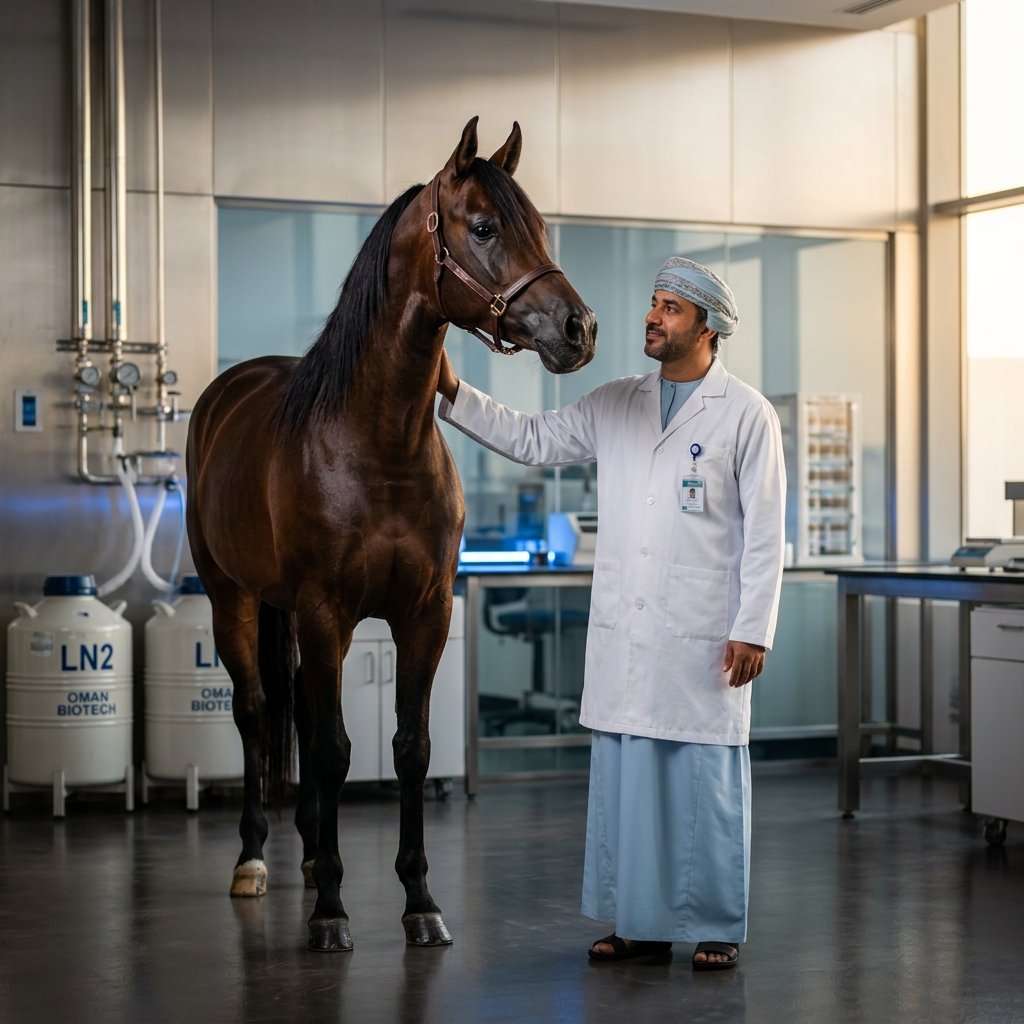
Oman has established its first genetic repository of frozen semen from elite purebred Arabian horses. A team of experts, working in partnership with the Oman Animal and Plant Genetic Resources Center (Mawarid) under the Ministry of Higher Education, Research and Innovation, and the Royal Cavalry of the Royal Court Affairs, successfully cryopreserved more than 2,000 samples at -196°C in liquid nitrogen. This project introduces new capabilities for artificial insemination and preserves the nation’s equine genetic heritage.
Advanced Biotechnology for Heritage Preservation
The initiative matches Oman’s national research and innovation goals by safeguarding animal genetic resources. By selecting high-performing stallions, the project aims to improve breeding outcomes, maintain genetic diversity, and build a digital database of Omani horse lineages.
The collection process follows strict scientific protocols. First, veterinarians evaluate the stallions for health, athletic performance, and genetic quality. The team then collects, processes, and cools the samples before committing them to deep freeze storage.
The Cryopreservation Process
Dr. Ahmed Al-Azab, the lead veterinarian on the project, explained that the selection focuses on elite stallions with proven records in racing, beauty competitions, and endurance. After conducting complete veterinary examinations, the team extracts the semen using specialized equipment under sterile laboratory conditions.
Mohammad bin Khalfan Al-Majarafi, a veterinary technician, described the laboratory phase. The team inspects the semen under a microscope to measure motility and concentration. They then add a cryoprotectant solution to protect the cell structures from damage during the freezing process. The temperature is gradually lowered before the vials are placed in liquid nitrogen storage tanks at -196°C. Each sample is tagged with detailed database records to track its origin and quality.
Strategic Benefits and Future Outlook
The successful preservation of over 2,000 samples offers several advantages for Omani equine management:
- Risk Reduction: Artificial insemination avoids the physical injuries and disease transmission risks associated with natural mating.
- Genetic Quality: Breeders can access top-tier bloodlines easily, improving the overall quality of local horse stocks.
- Scientific Research: The repository provides a valuable resource for genomic studies and veterinary research in Oman.
- Economic Opportunities: High-quality equine genetics can be commercialized locally and internationally, boosting Oman’s agricultural economy.
This biological library opens new possibilities for Omani breeders, helping them preserve and improve traditional bloodlines while utilizing modern technology to support the country’s cultural legacy.