Omani sculptor and visual artist Ali bin Suleiman Al Jabri has established a distinctive presence in the world of contemporary sculpture through his unique approach to materials, artistic expression, and cultural identity. His work explores the relationship between the artist, the material, and the passage of time, creating sculptures that bridge heritage, nature, and modern artistic thought.
A Lifelong Journey in Sculpture
Al Jabri’s artistic journey began in childhood through simple interactions with clay. Over the years, his passion evolved into a professional pursuit supported by academic studies in art education, aesthetics, and artistic practices. Since 2012, marble has become his preferred medium, serving as a living language through which he communicates ideas, emotions, and reflections on human experience.
According to Al Jabri, artistic creativity is rooted in the power of expression. While writers and poets communicate through words, painters and sculptors speak through visual forms, shapes, and spatial relationships.
The Relationship Between Mass and Space
One of the defining elements of Al Jabri’s sculptural philosophy is his exploration of the dialogue between mass and space. He believes that sculpture transcends physical form, creating an interaction between solid matter and the surrounding void.
“Mass and space are inseparable,” Al Jabri explains. “Their relationship creates a visual conversation that moves beyond silence and allows viewers to experience both motion and stillness.”
Listening to the Material
For Al Jabri, sculptural materials are not lifeless substances but carriers of history and memory. Stones preserve millions of years of geological transformations, while wood reflects the life cycle of trees spanning decades or even centuries.
Rather than imposing his will on a material, he begins each project by understanding its character and inherent possibilities. This process transforms sculpture into a dialogue between the artist’s vision and the material’s own story.
Omani Nature as a Source of Inspiration
The diverse landscapes of Oman have played a significant role in shaping Al Jabri’s artistic perspective. Geological formations, erosion patterns, mountains, and natural environments inspire many of his works.
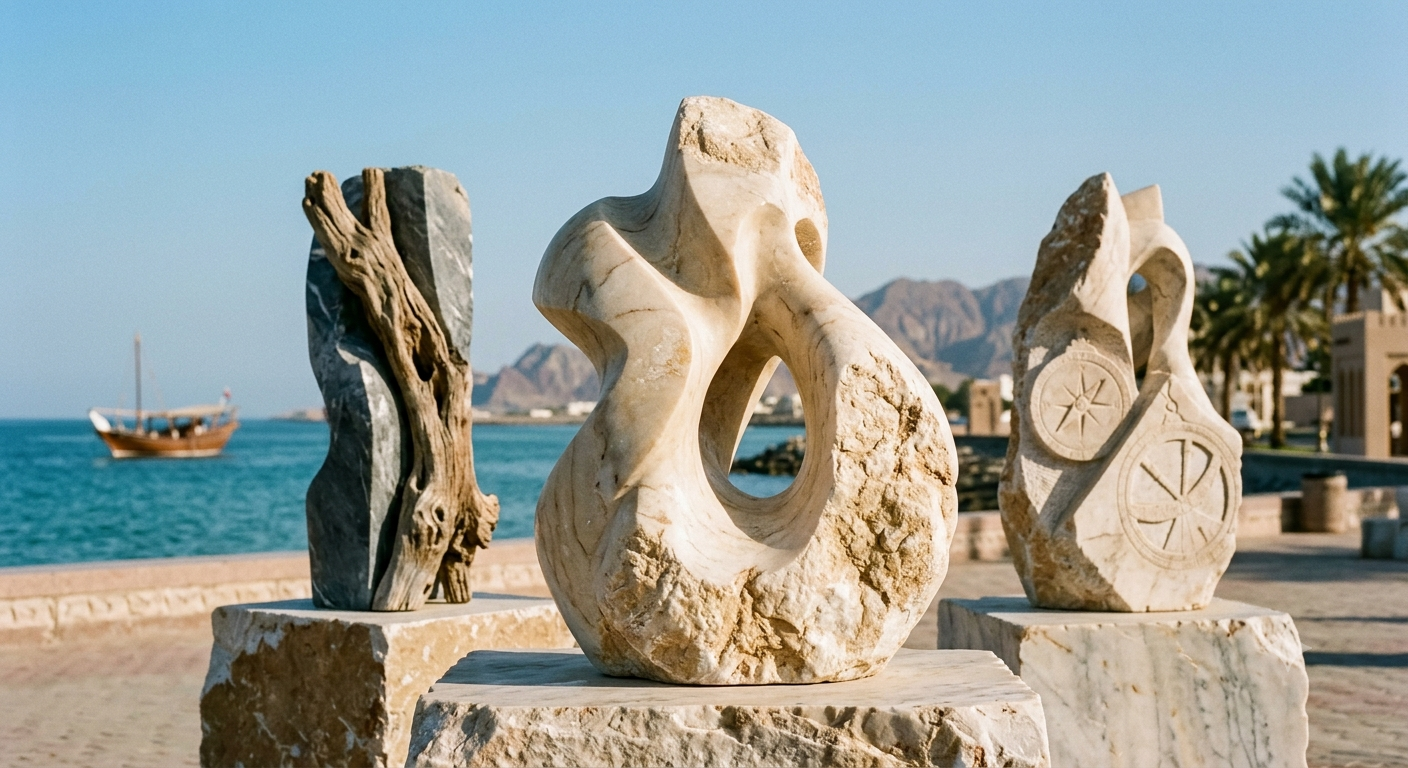
In one series, he recreated the effects of natural erosion on stone, translating geological processes into sculptural forms. In another, he combined wood and marble to reflect the coexistence of trees and rocks commonly seen in Oman’s natural scenery.
Preserving Identity While Reaching Global Audiences
Al Jabri believes that Omani sculpture is still developing its global identity but possesses strong foundations for international recognition. By drawing inspiration from local heritage while addressing universal human themes, Omani artists can communicate effectively with audiences worldwide.
His sculptures often incorporate symbols associated with Islamic science and knowledge, including sundials, compasses, and astrolabes. These elements represent humanity’s enduring quest for discovery, learning, and understanding.
Technology and Artificial Intelligence in Contemporary Art
Addressing the rise of technology and artificial intelligence, Al Jabri views these developments as opportunities rather than threats. He believes artists should embrace new tools while preserving the essence of artistic creativity.
However, he emphasizes that sculpture maintains a unique advantage: its physical presence. Digital images and screens can showcase sculptures, but they cannot fully replicate the experience of walking around a three-dimensional artwork, observing its shadows, textures, and interaction with space.
The Importance of Public Art in Oman
A strong advocate for public art, Al Jabri believes sculptures should extend beyond galleries and become part of everyday urban life. Public artworks enrich cities, strengthen cultural identity, and encourage community engagement with art.
He argues that investing in public art is not a luxury but an essential component of human and urban development, helping create more vibrant, beautiful, and culturally expressive environments.
Developing Oman’s Sculpture Community
Al Jabri also highlighted the importance of the Sculptors Camp hosted in Wadi Al Jizzi, North Al Batinah Governorate. The initiative has brought together local and international artists, fostering cultural exchange, artistic growth, and professional collaboration.
The camp has contributed significantly to the emergence of a new generation of Omani sculptors and has helped position Sohar and Oman as growing centers for visual arts and sculpture in the region.
Looking Toward the Future
For Ali Al Jabri, the role of the artist is not merely to document the past but to build connections between past, present, and future. His vision combines cultural authenticity, artistic innovation, and a commitment to fostering dialogue through art.
Through his sculptures, Al Jabri continues to promote Oman’s artistic identity while contributing to global conversations about creativity, culture, and the enduring relationship between humanity and the material world.