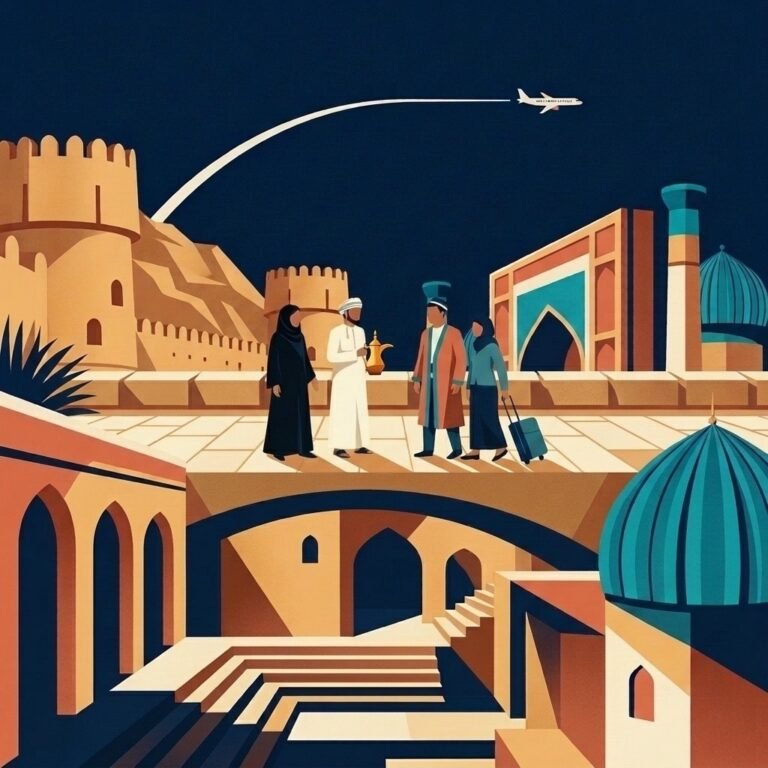
When Wednesday afternoon arrives on November 25, cars pack out of Muscat toward mountain villages, desert camps, and restored mud-brick alleys—marking the true start of Oman’s winter travel calendar.
On the Tuesday evening before the official National Day public holiday begins, petrol stations along Sultan Qaboos Highway and the Bidbid-Sur corridor stay busy until midnight. Roof racks hold firewood bundles, canvas floor cushions, and insulated dallah flasks. With November 20 falling on a Friday this year, the Ministry of Labour scheduled the two-day public and private sector holiday for Wednesday and Thursday, November 25 and 26, 2026—handing families across Oman an uninterrupted four-day break stretching through Saturday night.
Meteorologically and economically, this late-November window acts as an annual hinge. Daytime humidity drops along the Batinah coast, evening temperatures dip below fifteen degrees Celsius on the Jebel Akhdar plateau, and domestic travelers set off on a nationwide migration that opens Oman’s peak winter tourism season.
From Empty Mud-Brick Lanes to Youth-Run Heritage Inns
Nowhere is the shift in how Omanis spend their November break clearer than inside the historic walled quarters (harats) of Ad Dakhiliyah. Fifteen years ago, travelers visiting Nizwa stopped briefly at the fort and souq before driving back to Muscat or checking into highway hotels. Adjacent mud-brick neighborhoods such as Harat Al Aqr sat largely quiet behind crumbling sarooj walls.
Walk into Harat Al Aqr over the November 2026 holiday weekend, and every earthen lane hums past ten o’clock at night. Over the past decade, young Omani architects, families, and small investors have leased and restored ancestral mud-brick houses using traditional palm-beam (da’an) ceilings, carved sidr-wood doors, and lime plaster—turning formerly vacant compounds into boutique heritage inns, rooftop tea terraces, and specialty coffee roasteries.
Instead of leaving old neighborhoods frozen behind ropes, local youth enterprises have made historic architecture part of everyday leisure. Families book multi-room courtyard houses for three nights, walk through ancient falaj channels after dawn prayers, and drink pour-over coffee beneath two-hundred-year-old earthen arches.
Misfat Al Abriyeen and the Cooperative Model
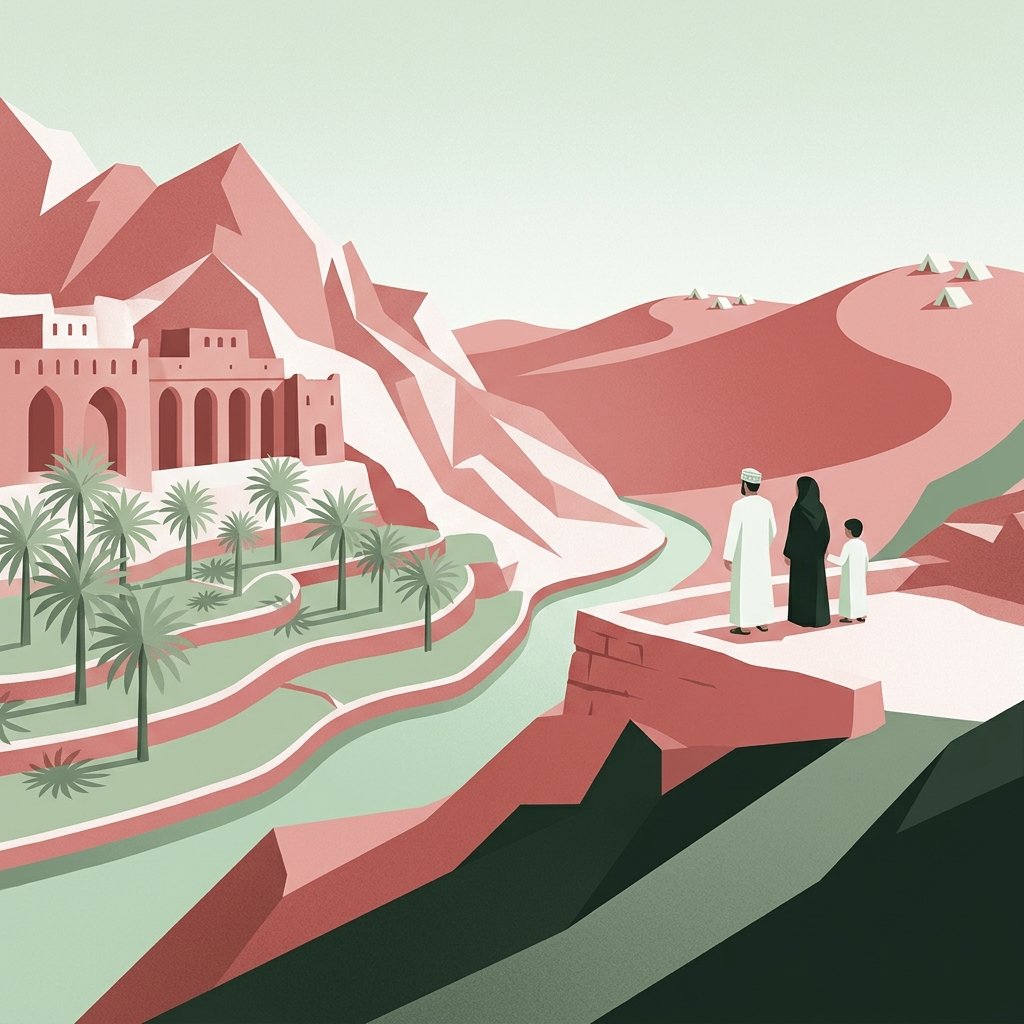
Forty minutes northwest of Nizwa on the slopes above Al Hamra, the mountain village of Misfat Al Abriyeen illustrates how community governance keeps winter tourism grounded. Perched roughly nine hundred meters above sea level above terraced banana, pomegranate, and date gardens irrigated by a two-thousand-year-old spring falaj, Misfat Al Abriyeen was named one of the UN World Tourism Organization’s Best Tourism Villages in 2021.
Rather than selling family stone houses to outside hotel chains, residents formed a local cooperative company—Al Misfat Al Ahlia—parking cars outside the narrow stone entrance gate, training village youth as mountain trail guides, restoring historic sablah meeting halls into guesthouses, and routing income back into rooftop bakeries and household kitchens led by Omani women. During the four-day November holiday break, rooms across the cliffside terraces book out weeks ahead.
Desert Horizons in Bidiyah and Gathering Spaces in Muscat
East in North Al Sharqiyah, the late-November break signals opening week for the winter camps scattered across the golden-red ridges of Rimal Bidiyah. As night air turns crisp across the sands, Omani camp operators welcome both domestic families and regional road-trippers arriving from across the Gulf Cooperation Council for stargazing dinners, camel treks, and quiet mornings above the dunes.
For households staying closer to the capital, Muscat’s parks turn the holiday weekend into an open-air market for small Omani businesses. At Al Sahwa Park, the free-entry National Day celebration running from November 26 to 28 brings together more than one hundred local vendors—ranging from home-grown food concepts and specialty halwa makers to Omani fragrance houses and craft designers—under strings of evening lights.
A Growing Pillar of the Domestic Economy
Behind the packed guesthouses and highway traffic sits measurable economic momentum. According to official Ministry of Heritage and Tourism and National Centre for Statistics and Information figures, Oman now welcomes roughly four million inbound visitors annually, while direct tourism value added has climbed past RO 1.13 billion—accompanied by 584 active heritage and tourism investment projects valued at RO 2.59 billion across the governorates.
Crucially, domestic travel accounts for a substantial share of hotel, guesthouse, and restaurant revenue outside Muscat. When families pack the car on Wednesday, November 25, their weekend spending flows directly to village cooperatives in Al Hamra, youth-owned cafés in Nizwa, camel guides in Bidiyah, and small vendors in Seeb—turning a four-day national holiday into the opening bell of a five-month winter season.