Sixty-Six Omani Musicians Bring the Sirnai, Haboot, and Khareef Mist Into the Concert Hall
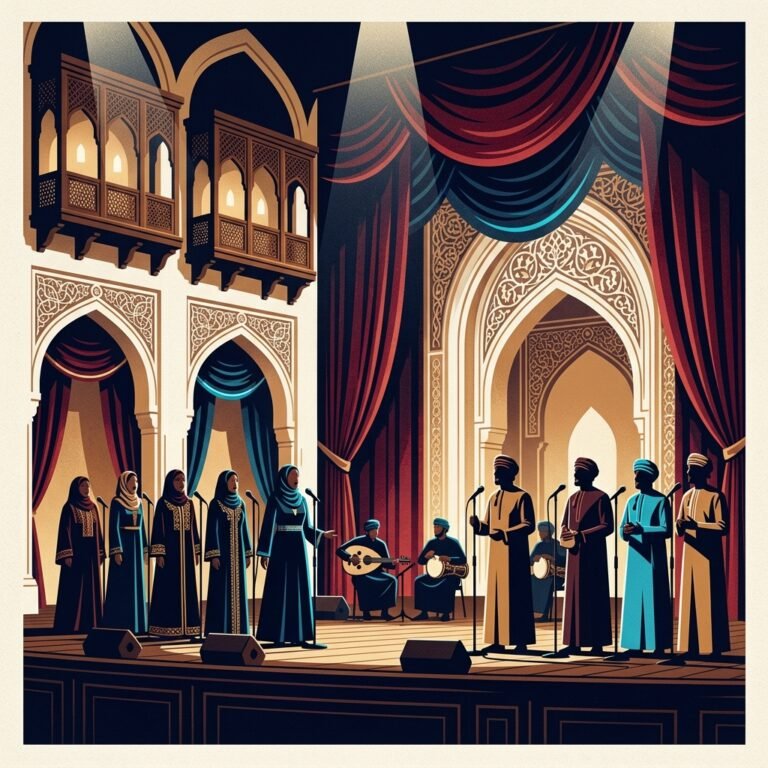
At the Madinat Al Irfan Theatre, the Oman Center for Traditional Music Ensemble and conductor Amir Awadh Bashir Bait Mabrouk united ancestral coastal, mountain, and desert rhythms with contemporary orchestral scores in “Al Salam Al Maheeb.”
When the reed of the Omani sirnai first cuts through the quiet of a concert hall, its bright, reedy voice usually belongs to open courtyards, coastal wind, and ceremonial gatherings. Last night at the Madinat Al Irfan Theatre in the Oman Convention and Exhibition Centre, that familiar traditional reed rose above a full national orchestra—answered by violins, cellos, double basses, woodwinds, brass, and a mixed choir of Omani voices.
Organized by the Ministry of Culture, Sports and Youth under the patronage of His Excellency Dr. Abdullah bin Nasser Al Harrasi, Minister of Information, the national musical concert Al Salam Al Maheeb (“The Majestic Peace”) brought 66 Omani instrumentalists and vocalists onto one stage. Rather than treating traditional folk music and Western symphonic arrangement as separate worlds, the evening placed them in direct conversation.
Folk Instruments Inside the Orchestral Score
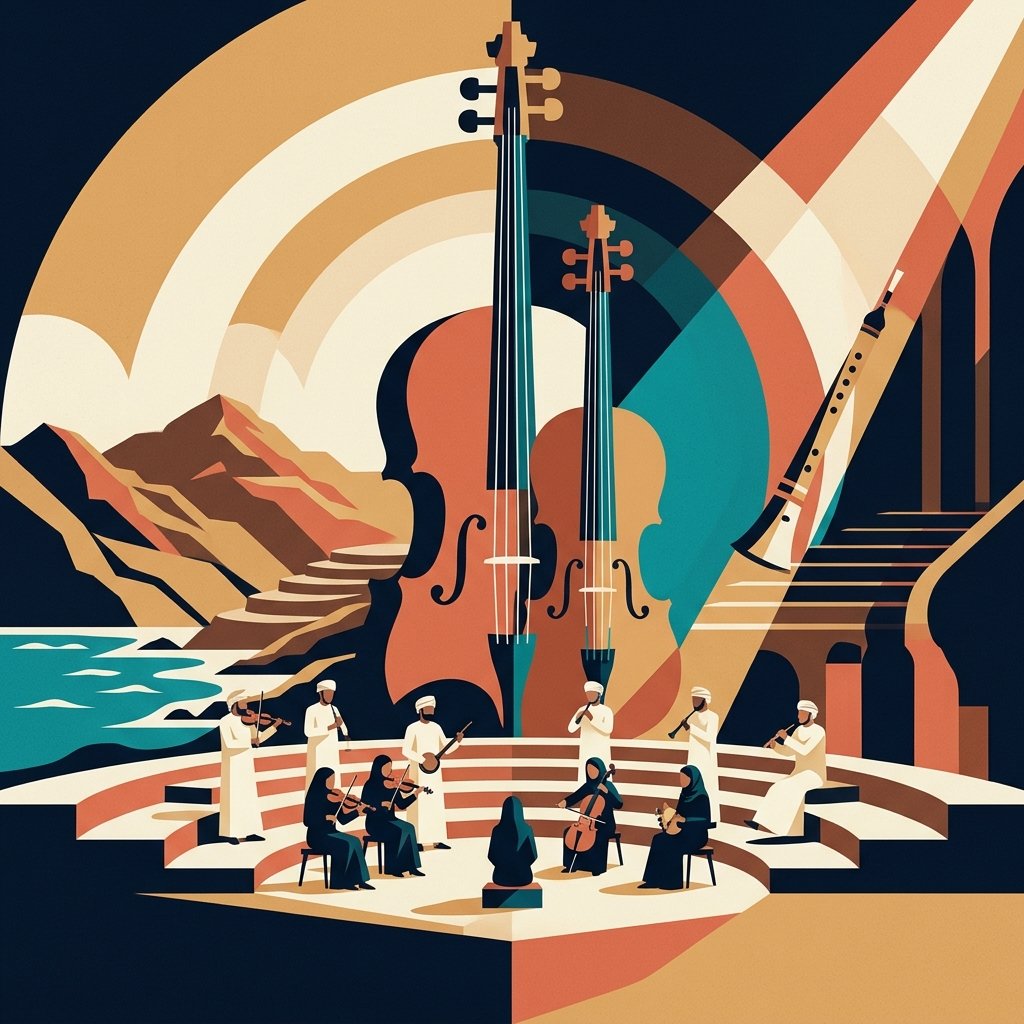
Performed by the ensemble of the Oman Center for Traditional Music under the baton of Maestro Amir Awadh Bashir Bait Mabrouk, the concert paired orchestral string and wind sections with instruments that have carried Omani memory for centuries: the sirnai, the double-piped mizmar abu maqroun, the reed flute (qasaba), and traditional folk percussion.
Across Oman’s diverse environments—from maritime ports and high mountain villages to desert camps and agricultural wadis—each region has developed its own rhythmic pulse. Maestro Bait Mabrouk and the 66 performers arranged these coastal, mountain, Bedouin, and rural musical forms so they could enter symphonic structures while keeping their original melodic character intact.
A Six-Part Journey Across Omani Landscapes
The evening unfolded across six carefully structured movements designed to guide listeners through Oman’s cultural and natural geography. The ensemble opened with Al Salam Al Maheeb, a five-minute overture expressing national pride and unity, followed immediately by Al Sirnai, a five-minute orchestral showcase placing the traditional Omani reed instrument in dialogue with strings and woodwinds.
The program then moved into a five-minute symphonic treatment of Al Haboot, linking traditional ceremonial rhythms with modern orchestration, before transitioning into Ruh Al Radhadh (“Spirit of the Khareef Mist”), a ten-minute tone poem evoking the monsoon mists and green slopes of Dhofar. Subsequent movements united male and female choral harmonies with solo vocalists across maritime and interior folk traditions.
For the Ministry of Culture, Sports and Youth, Al Salam Al Maheeb represents a living approach to safeguarding intangible musical heritage. By giving Omani musicians and composers the stage to perform traditional instruments alongside full orchestral ensembles, the concert demonstrated that Oman’s ancestral melodies can expand onto contemporary concert stages without losing the soul of the communities that created them.
Organization Design Expert in the Oil & Gas sector, with a passion for visual storytelling and creative content. Alongside his professional work in organization design, he is a skilled videographer and visual content creator, combining strategic thinking with a strong eye for compelling visuals.