The Missing Ally: Investigating Oman’s Deliberate Erasure from Washington’s “Stone Ages” Alliance
An Investigative Report
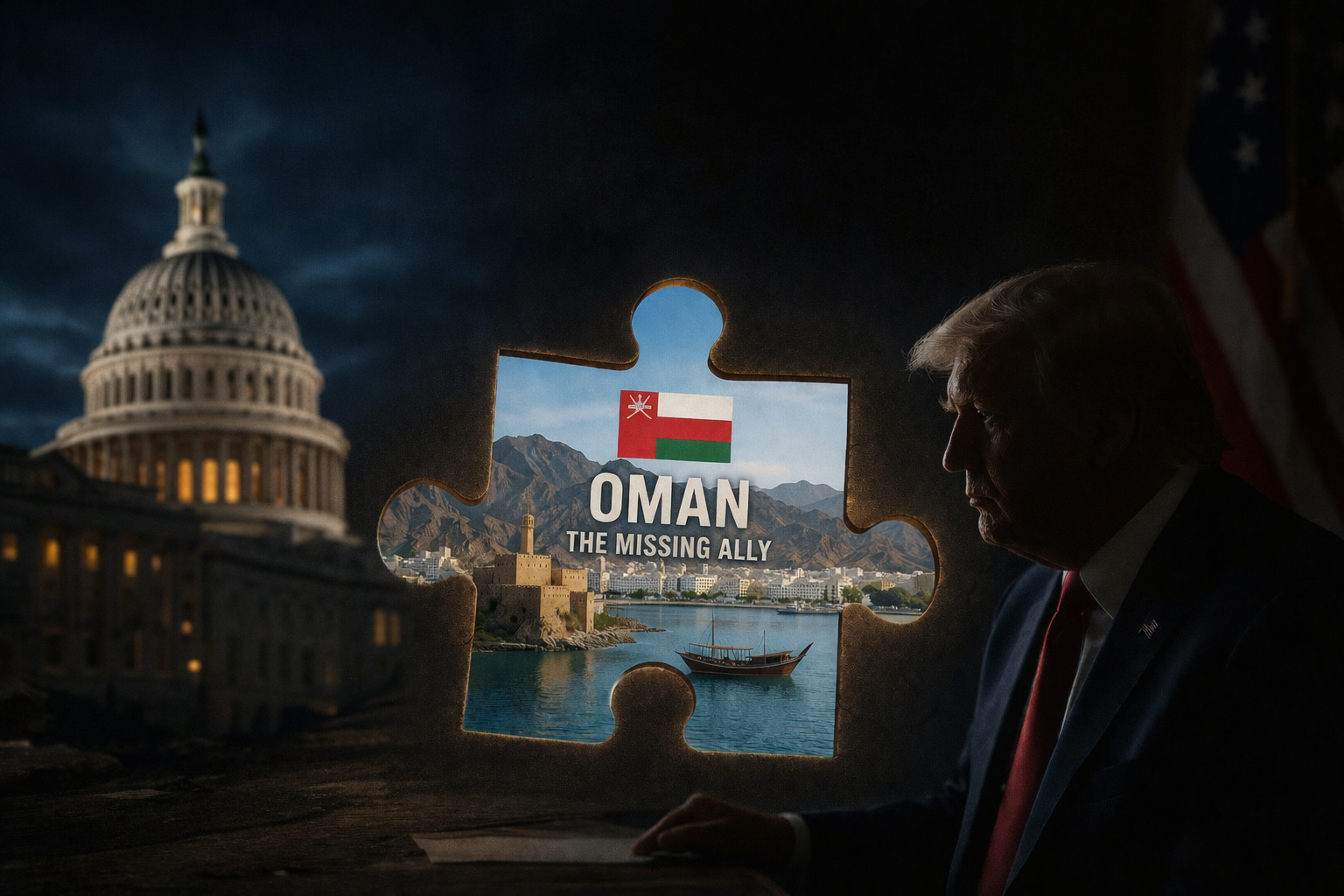
When the U.S. Department of State’s official account posted President Donald Trump’s message thanking “allies in the Middle East”—naming Israel, Saudi Arabia, Qatar, the UAE, Kuwait, and Bahrain—a careful observer noticed a glaring omission:
The Sultanate of Oman was not mentioned.
Academic specialist Abdullah Baaboud flagged it immediately:
“Notice who’s missing: Oman.”
Was this a simple oversight—or a deliberate exclusion of a country whose diplomacy runs counter to Washington’s strategic approach?
This report examines public statements, diplomatic disclosures, and official warnings from Oman’s leadership to understand why Oman has become an unspoken obstacle to U.S. and Israeli regional strategy—and why its absence may be intentional.
Part One: The “Stone Ages” Doctrine — What Trump Didn’t Say
Trump’s statement came amid heightened tensions with Iran.
The phrase “back to the stone ages,” referenced in Baaboud’s analysis, reflects a broader policy framing tied to maximum-pressure strategies. Since 2018, similar language has appeared in discussions of sanctions and warfare that target infrastructure and essential services.
Baaboud characterizes this as:
“Collective punishment normalized as policy.”
Oman, notably, has taken a different path. While other regional partners aligned with or remained silent on these policies, Oman:
- Maintained diplomatic channels with Iran
- Hosted backchannel nuclear discussions
- Refused participation in military coalitions targeting Tehran
Key question: Is Oman excluded because it does not align with escalation-based strategies?
Part Two: The Secret Negotiations Washington Disrupted
Oman’s Foreign Minister, Badr Albusaidi, revealed that:
The U.S. and Iran came “within hours of a real deal” on the nuclear issue—twice in nine months.
Oman served as the intermediary. Iran reportedly agreed to strict nuclear limitations, including zero stockpiling of enriched uranium.
According to Albusaidi:
“Just hours after the most substantive talks, the U.S. and Israel launched an unlawful military strike.”
“This is not America’s war.”
Implication: If accurate, this suggests diplomacy was not merely unsuccessful—but interrupted at a critical stage.
Oman has since reiterated:
“Whatever your view of Iran, this war is not of their making.”
Part Three: The Strait of Hormuz — Oman’s Strategic Role
The Strait of Hormuz carries roughly 20% of global oil shipments.
While U.S. naval forces operate in the region, Oman has taken a quieter role:
- Coordinating safe maritime passage
- Engaging both Washington and Tehran
- Facilitating de-escalation behind the scenes
Shipping advisories increasingly recommend routes closer to Oman’s waters—reflecting confidence in its mediation.
Finding: Oman is not neutral by absence—but by active engagement on all sides.
Part Four: “Constructive Neutrality” and Regional Tensions
Oman’s diplomatic stance—often described as “constructive neutrality”—differs from regional alignment patterns.
In recent discussions, Oman raised concerns about:
- Expanding humanitarian crises
- Escalation risks
- Broader instability
Baaboud summarizes Oman’s position:
“Speaking our mind to all in pursuit of peace.”
This includes criticism of escalation strategies by both the United States and Israel.
Conclusion: Neutrality here functions as an alternative strategic model—not passive positioning.
Part Five: Data Snapshot — Oman’s Diplomatic Position
- Mentions of Saudi Arabia, UAE, Israel, Qatar, Kuwait, Bahrain (security context): 47
- Mentions of Oman (security context): 3
- Mentions of Oman as “ally”: 0
Meanwhile, Oman has:
- Hosted multiple rounds of U.S.–Iran indirect talks
- Facilitated negotiations on Yemen
- Maintained diplomatic presence in Damascus and Sana’a
Oman’s leadership has warned of “widespread economic problems” resulting from ongoing conflict.
Final Assessment
Oman’s absence from Trump’s list of “allies” appears less like an oversight and more like a reflection of strategic divergence.
Oman:
- Rejects escalation-based doctrine
- Prioritizes mediation over alignment
- Maintains communication with opposing sides
In doing so, it challenges a framework that prioritizes military cohesion over diplomatic flexibility.
The key issue is not who was included—but who was excluded, and what that exclusion represents.