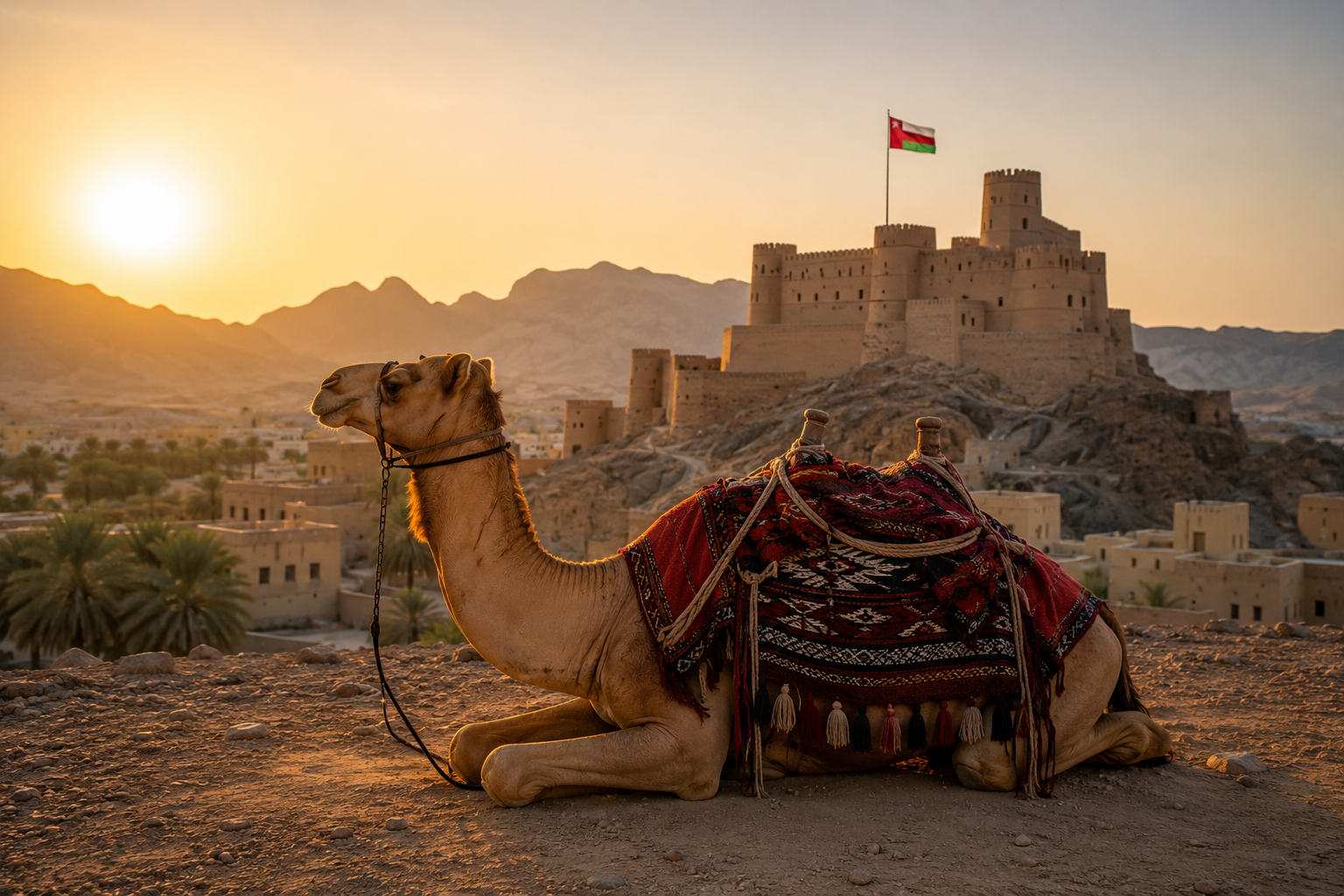
The camel has long been one of the most important symbols of Oman’s heritage and identity.
For centuries, before the development of modern transportation, camels played a vital role
in connecting communities across the Sultanate. They carried people and goods through deserts,
mountains, and remote villages, making trade and communication possible across vast distances.
Often referred to as the “Ship of the Desert,” the camel is perfectly
adapted to Oman’s challenging environment. Its strength, endurance, and ability to thrive in harsh
conditions have made it an essential companion throughout Omani history. Beyond its practical value,
the camel became deeply woven into the culture and traditions of the country.
Today, camels remain an important part of Omani life. They can be seen at cultural festivals, heritage
events, and traditional camel races that continue to attract participants and spectators from across
the nation. Camels are also celebrated in Omani poetry, folklore, and storytelling, reflecting the
strong bond between the animal and the people of Oman.
On World Camel Day, we recognize not only the camel’s historical contributions but also its cultural
significance. The camel represents resilience, patience, and a deep connection to the land—qualities
that continue to inspire generations of Omanis.
As Oman embraces the future while preserving its traditions, the camel remains a proud symbol of the
nation’s rich heritage and enduring spirit.