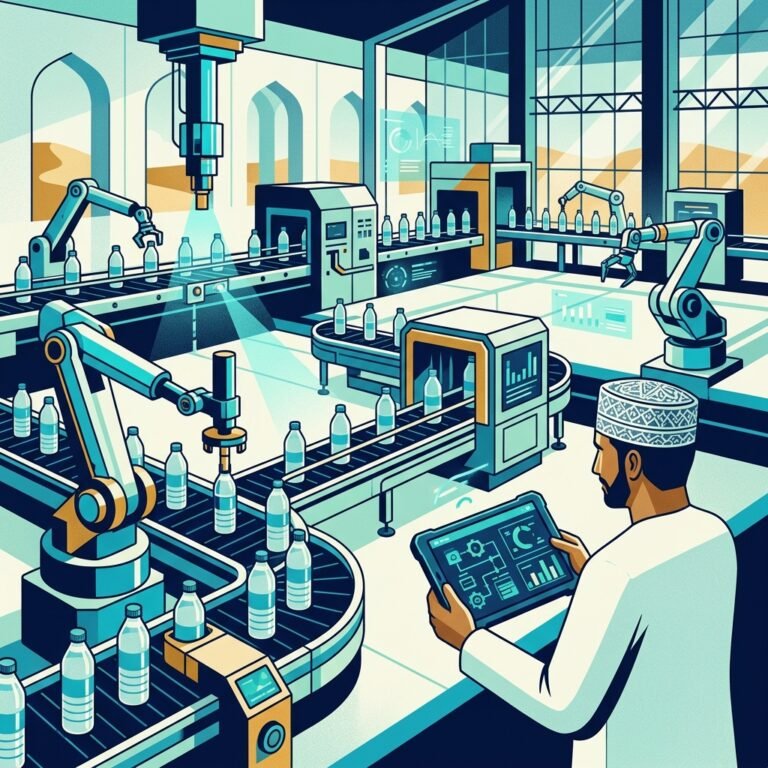
The “Kafa’a” Lean Manufacturing Initiative has adopted a set of key performance indicators (KPIs) to measure its impact on participating factories, ensuring tangible and measurable results, according to the
Oman News Agency.
The indicators include boosting productivity by improving operational efficiency and reducing production time, lowering operating costs through minimizing waste and optimizing resource utilization, and reducing waste in raw materials, time, and energy. They also focus on enhancing product quality, reducing defects, improving equipment efficiency, and increasing operational readiness.
The initiative’s outcomes are assessed based on achieved financial savings, the number of implemented improvement projects, and the sustainability of lean manufacturing practices within factories after the program concludes. These efforts aim to enhance the competitiveness of the industrial sector and support the goals of Oman’s industrial strategy and
Oman Vision 2040.
Improvement projects are expected to generate annual financial savings of approximately OMR 360,000, while also improving operational efficiency, productivity, and competitiveness of industrial enterprises. This reflects the commitment of the Ministry of Commerce, Industry and Investment Promotion to adopting global best practices, fostering a culture of continuous improvement, and supporting industrial sector growth in the Sultanate.
Fatma bint Issa Al Ajmi, Director of the “Kafa’a” Program at the Ministry of Commerce, Industry and Investment Promotion, stated that the initiative is implemented in partnership with
Public Establishment for Industrial Estates (Madayn)
and
Petroleum Development Oman.
The program includes several stages, starting with evaluating industrial enterprises and selecting participating factories, followed by training teams and equipping them with the knowledge and tools needed to apply continuous improvement methodologies, and culminating in the implementation and measurement of improvement projects.
Lean manufacturing methodologies enhance production efficiency by focusing on value-added activities, eliminating sources of waste in time, materials, and effort, and improving process flow. This leads to reduced production costs, shorter manufacturing time, and more efficient use of resources.
These methodologies also improve product quality by standardizing work procedures, minimizing errors and defects, and promoting a culture of continuous improvement within industrial establishments.
Al Ajmi noted that these outcomes directly strengthen the competitiveness of Omani industries by enabling factories to deliver higher-quality products at more competitive costs, meet delivery deadlines, and achieve customer satisfaction. This enhances their ability to compete in local markets and expand regionally and globally, supporting industrial exports and the objectives of Oman Vision 2040.
The Ministry has set criteria for selecting participating companies, including readiness to adopt lean manufacturing methodologies, commitment from senior management, availability of qualified teams, and clear opportunities to achieve measurable results.
Currently, 13 factories have been selected to participate, with nine advancing to the implementation phase after meeting program requirements. The Ministry plans to expand the initiative in future phases.
Al Ajmi highlighted that the initiative has already yielded positive results in participating factories, citing
Oman Cables Industry
as a success story.
The application of lean methodologies has improved operational efficiency, identified and addressed waste areas, organized the work environment, and enhanced production flow—leading to higher productivity and reduced time and resource waste.
The initiative also contributes to building national capabilities through a free training program supervised by experts from Petroleum Development Oman, based on the Lean Six Sigma methodology. Participants who complete the program receive a “Green Belt” certification.
Al Ajmi added that the initiative helps transfer global best practices and promote a culture of innovation and continuous improvement within factories, supporting export growth and attracting further industrial investments.
She concluded that the Ministry aims for lean manufacturing to become a sustained workplace culture rather than a temporary initiative, with plans to expand the program to include more industrial enterprises and sectors in the future.
Source: Oman News Agency