At UN Headquarters in New York, Oman Reaffirms Global Anti-Discrimination Pledges and Multilateral Peace Diplomacy
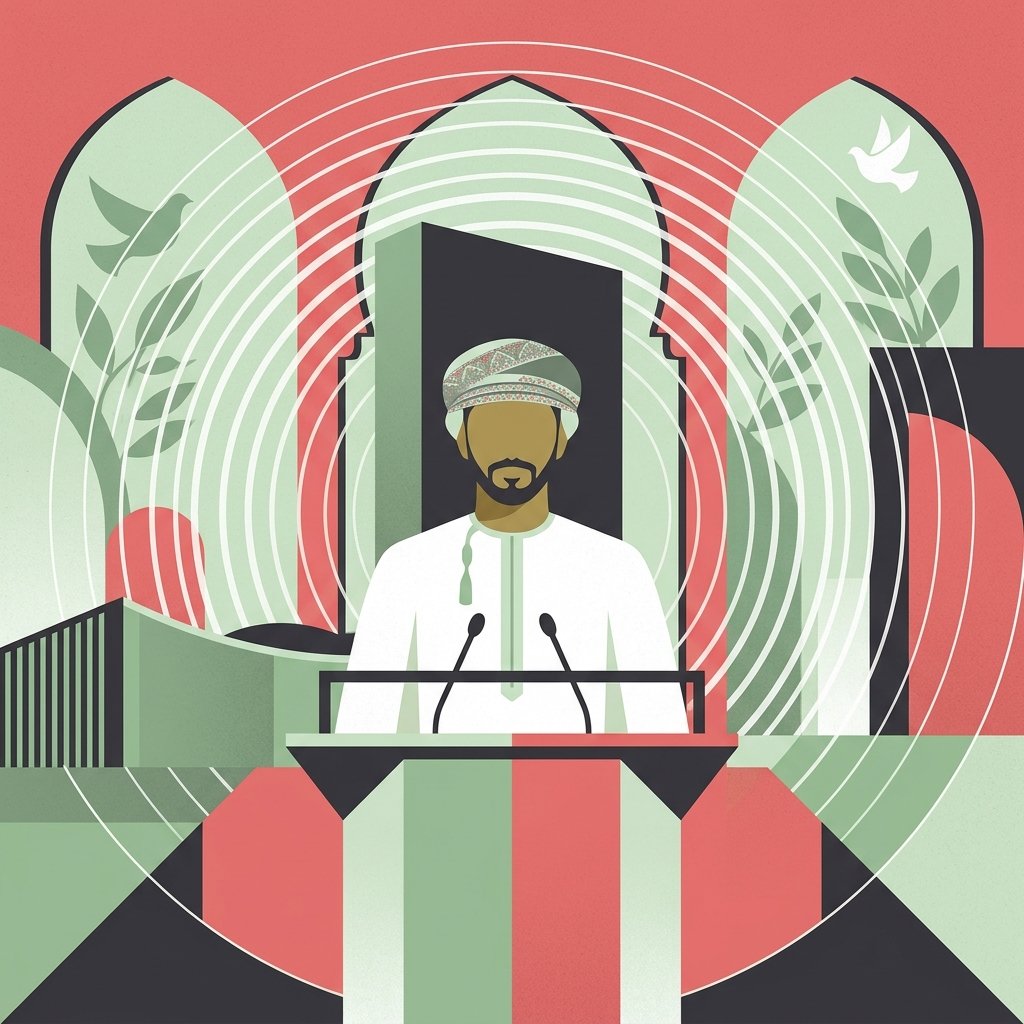
Addressing the high-level plenary meeting commemorating the twenty-fifth anniversary of the adoption of the Durban Declaration and Programme of Action (DDPA) at the United Nations Headquarters in New York, the Sultanate of Oman reaffirmed its unequivocal commitment to international conventions aimed at eliminating racism, racial discrimination, xenophobia, and related intolerance. Led by Sheikh Ambassador Mohammed bin Abdullah Al Qatabi, Head of the Organizations Department at the Foreign Ministry, the Omani delegation delivered an assertive statement positioning human dignity, dialogue, and intercultural mutual respect as indispensable pillars of international peace and security.
The high-level session, convened during the 81st Session of the United Nations General Assembly, brought together diplomatic delegations, international jurists, and human rights advocates to assess global progress a quarter-century after the landmark 2001 Durban conference. In its formal intervention, the Sultanate underscored that enduring multilateralism requires bridging the widening divide between formal diplomatic declarations and the tangible, felt daily realities of vulnerable populations across the globe.
From Global Covenants to Concrete Human Impact
The Omani delegation stressed that international treaties and anti-discrimination covenants risk becoming hollow legal rhetoric unless actively operationalized into domestic legal frameworks, educational curricula, and socio-economic safety nets. Oman’s intervention articulated a clear principle: diplomatic declarations remain inert until they actively eradicate structural discrimination, protect minority and migrant rights, and guarantee equal access to legal redress and civic participation across generations.
Reflecting its distinct foreign policy ethos, Oman detailed its long-standing national and international platforms designed to replace polarized ideological friction with institutionalized, structured engagement. Prominent among these is the “Message of Peace” and the “Human Concord” (Al Mu’talaf Al Insani) initiative, which operate as cultural diplomacy frameworks promoting pluralism, religious tolerance, and shared ethical imperatives across international forums in Europe, Asia, and the Americas.
“The fundamental challenge confronting multilateral diplomacy today is the translation of international legal commitments into tangible improvements in the daily lives of human beings. International conventions are meaningful only when they actively defend human dignity and convert historical ideological friction into open arenas for mutual understanding and sustainable cooperation.”
— Sheikh Ambassador Mohammed bin Abdullah Al Qatabi, Head of Organizations Department, Foreign Ministry
The Muscat Action Plan: Mobilizing Traditional and Grassroots Leaders
A central milestone highlighted during Oman’s UN intervention was the landmark “Muscat Action Plan,” formally launched at the United Nations Headquarters in June 2026. The framework represents an innovative paradigm shift in multilateral conflict prevention: rather than relying exclusively on centralized state apparatuses, it directly mobilizes traditional, religious, and indigenous community leaderships to preemptively counter hate speech, dismantle digital disinformation, and mitigate the systemic triggers of violent incitement and mass atrocities.
By equipping local elders, tribal figures, and community mediators with early-warning communication protocols and de-escalation toolkits, the Muscat Action Plan establishes resilient societal firewalls against polarizing sectarian narratives. As Ambassador Al Qatabi noted, community-based leadership structures often possess historical authority and moral legitimacy that international bodies lack, making their active engagement essential for durable social cohesion and early violence prevention.
Multilateral Mediation and Grassroots Resilience
The Sultanate emphasized that the Muscat Action Plan directly complements Oman’s established role as an impartial, trusted international mediator in regional and global conflicts. In an era marked by geopolitical polarization, regional military escalations, and humanitarian crises, Oman’s diplomatic model pairs sovereign statecraft with grassroots societal resilience, ensuring that peacebuilding agreements are anchored in the authentic social fabric of affected communities rather than imposed from afar.
The address specifically called upon the United Nations and member states to invest in local knowledge networks and expand youth participation in preventative diplomacy. Oman argued that younger generations, disproportionately exposed to digital hate algorithms and economic disenfranchisement, must be positioned as active co-architects of national anti-discrimination strategies and intercultural exchange programs.
A Foreign Policy Anchored in Vision 2040 and International Law
Oman concluded its diplomatic statement by reaffirming its resolve to partner closely with the United Nations, regional bodies, and civil society organizations in constructing an international order where diversity is recognized as an institutional asset rather than exploited as a political fault line. Under the strategic tenets of Oman Vision 2040, the Sultanate’s foreign policy remains fundamentally anchored in sovereign autonomy, international law, non-interference in internal affairs, and the relentless construction of diplomatic bridges that transform entrenched conflict into enduring peace.
Source: Oman Daily | Ministry of Foreign Affairs & United Nations General Assembly High-Level DDPA Meeting