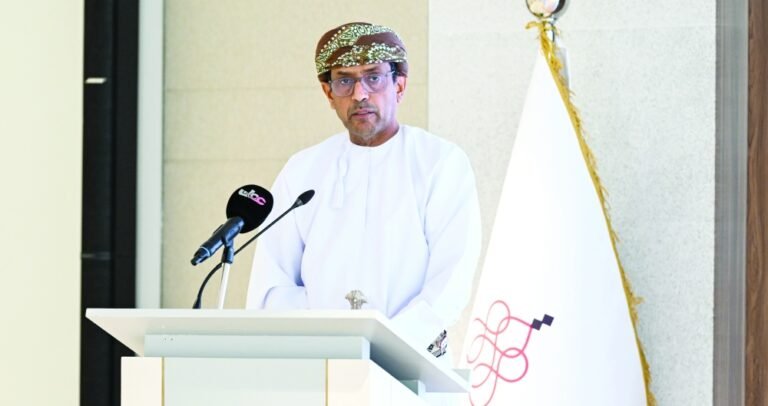
Oman’s maritime landscape is undergoing a deliberate, high-velocity modernization. The Ministry of Transport, Communications and Information Technology (MTCIT) has officially rolled out the Oman Maritime Gateway (بوابة عُمان البحرية), a comprehensive single-window digital ecosystem consolidating more than 90 electronic port and maritime affairs services under one interface.
The platform replaces fragmented physical paperwork and manual desk clearances with automated, real-time digital workflows. By linking vessel tracking, port authority clearances, maritime safety certifications, seafarer credentials, and provisioning logistics, the Gateway establishes an integrated operational backbone for the Sultanate’s commercial and industrial maritime hubs—from Salalah and Duqm to Sohar and Sultan Qaboos Port.

Streamlined Architecture: From 13 Foundational Services to 90+ Integrated Solutions
The latest deployment introduces 21 advanced automated services, expanding on earlier foundational releases to bring 34 mission-critical maritime functions online, with the broader architecture scaling across more than 90 individual transactional endpoints.
According to maritime authorities, the gateway incorporates a real-time executive dashboard that tracks vessel clearance timelines, port capacity utilization, and regulatory compliance. Key digitized operations include:
- Vessel Inward & Outward Clearances: Automated electronic processing that cuts turnaround time for international cargo carriers and transshipment vessels.
- Maritime Safety & Environmental Inspection: Instant digital issuance and renewal of seaworthiness, navigation permits, and environmental compliance records.
- Seafarer Certification & Crew Management: Streamlined verification and automated visa coordination for maritime crews transiting Omani territorial waters.
- Bunkering & Port Supply Coordination: Seamless scheduling for ship maintenance, spare parts distribution, and low-emission bunkering operations.
“The Oman Maritime Gateway is not merely an administrative portal—it is an economic lever. By eliminating friction in port logistics and centralizing data oversight, we enhance the competitiveness of Omani ports along the world’s busiest maritime arteries.”
— Maritime Affairs Directorate, MTCIT
Capitalizing on Strategic Geography Outside the Strait
Positioned directly along international deep-water trunk lines outside the congested Strait of Hormuz, Oman’s ports handle an increasingly heavy share of global transshipment. Over 80% of regional deep-draft container traffic and energy carriers navigate these waters, making operational speed and clear regulatory turnaround decisive factors for shipping lines choosing logistical bases.
The digital gateway directly feeds into Oman’s broader Blue Economy strategy. Rather than treating ports simply as transit docks, the Sultanate is clustering integrated industrial parks, maritime maintenance yards, cold-chain processing centers, and specialized marine engineering hubs directly around its coastal terminals.
Empowering National Talent in Maritime Technology
Beyond operational speed, the modernization drive is creating dedicated engineering and operational career tracks for Omani professionals. Local talent is taking the lead in managing automated container terminals, operating intelligent maritime traffic management systems (VTS), and supervising sustainable aquaculture and maritime supply chains.
As the Oman Maritime Gateway continues its phased rollout across 2026, it represents a concrete execution milestone under Oman Vision 2040—converting the nation’s historic seafaring legacy into a digitized, resilient economic pillar for decades to come.