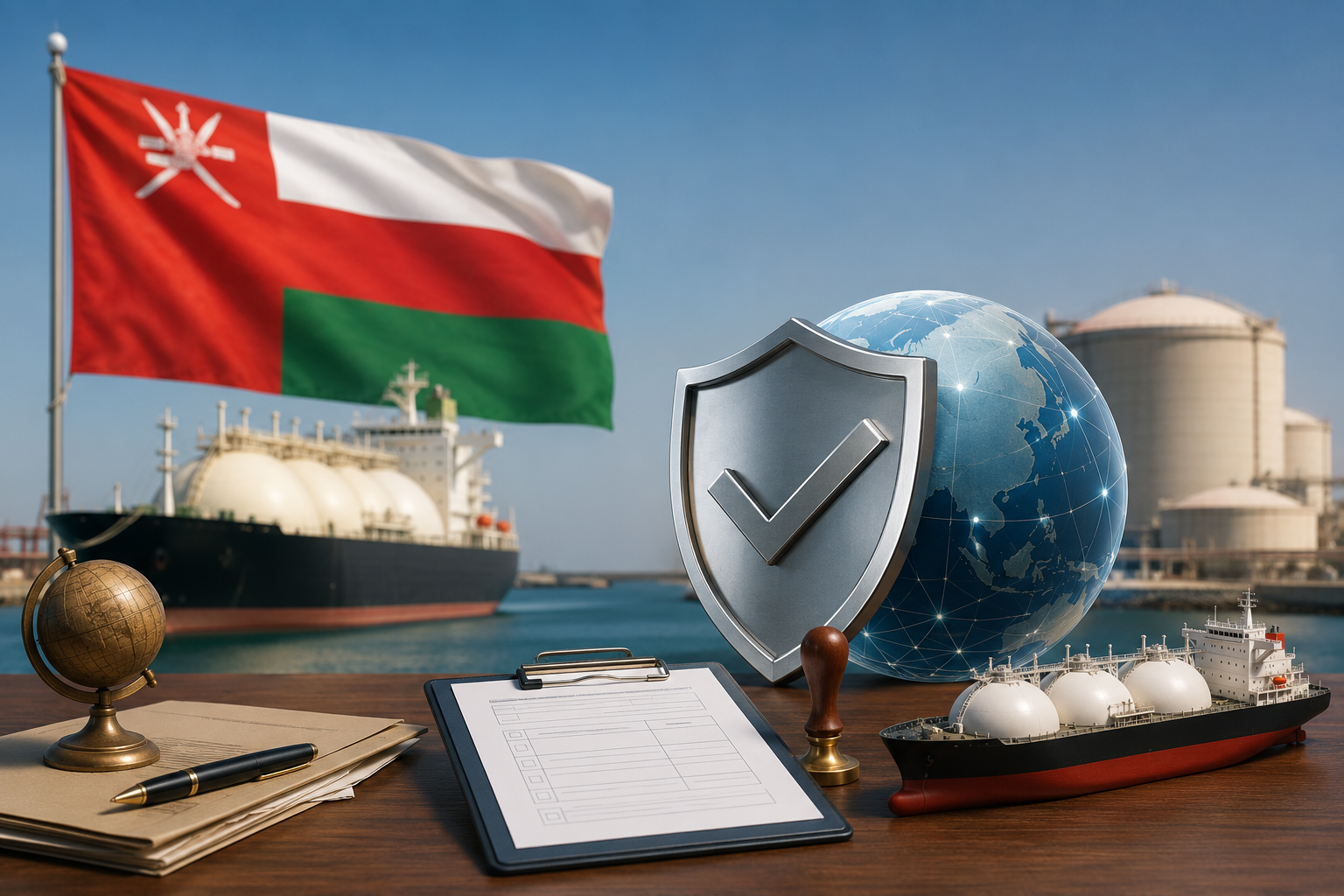
Muscat – In the wake of sanctions announced by the U.S. Treasury’s Office of Foreign Assets Control (OFAC) against an international network accused of disguising Iranian liquefied petroleum gas (LPG) as Omani product, the Sultanate of Oman has been conspicuously absent from the list of accused parties—save for the misuse of its reputable name.
According to the U.S. Treasury, the sanctioned network—comprising 12 commercial entities, six shadow fleet vessels, and individuals linked to the UAE, China, Iran, Panama, and the Marshall Islands—deliberately forged certificates of origin to market Iranian LPG as Omani. The estimated value of the shipments reaching end users in South and Southeast Asia runs into the hundreds of millions of dollars.
Omani official and private sources have confirmed that the Sultanate has no connection whatsoever to the operations described. Not a single Omani entity, company, or citizen has been named, charged, or even remotely implicated in the U.S. action.
Clean Reputation, Exploited for Deception
Diplomatic observers familiar with the case note that the perpetrators deliberately chose to cloak their operation under the Omani flag precisely because of Oman’s clean international standing and well-documented compliance with global trade norms. In other words, the very integrity that Oman has built over decades made it an attractive cover for fraudulent actors.
“The Sultanate’s name was not a participant—it was a prop,” one regional trade analyst commented.
No Allegation Against Oman
Crucially, the U.S. Treasury’s sanction order includes no accusation, implicit or explicit, against any Omani governmental body, regulatory authority, or private enterprise. The charge is narrowly directed at non-Omani parties alleged to have falsified documentation to indicate Omani origin without any knowledge or involvement from Omani quarters.
Oman’s Ministry of Commerce, Industry and Investment Promotion has long maintained strict rules on certificates of origin, with electronic tracking and verification mechanisms designed to prevent exactly this type of forgery.
A Call for Vigilance, Not Retaliation
While the Sultanate has refrained from issuing an official rebuke—preferring its customary diplomatic restraint—informed Omani media circles view the incident as an unfortunate but telling example of how the country’s global credibility can become a double-edged sword.
“Oman is not angry; Oman is clarifying,” a senior Omani journalist said. “The story here is not Omani complicity. The story is that Omani integrity was stolen and misused.”
The Sultanate is widely expected to quietly engage with international partners to strengthen authentication mechanisms for trade documents, ensuring that its good name remains exactly that—a name, not a tool for illicit trade.