Beneath the Daymaniyat Islands, Five 3D-Printed Omani Landmarks Become Living Coral Reefs
Lowered onto the sandy seabed of the Daymaniyat Islands Nature Reserve, five architectural reef modules printed in Omani concrete are giving coral polyps and reef fish a new home.
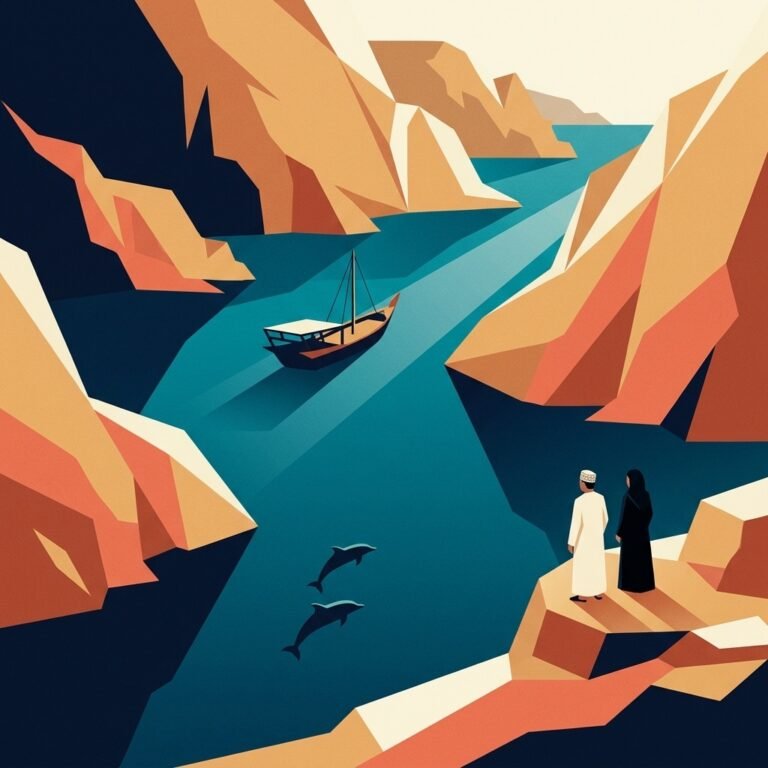
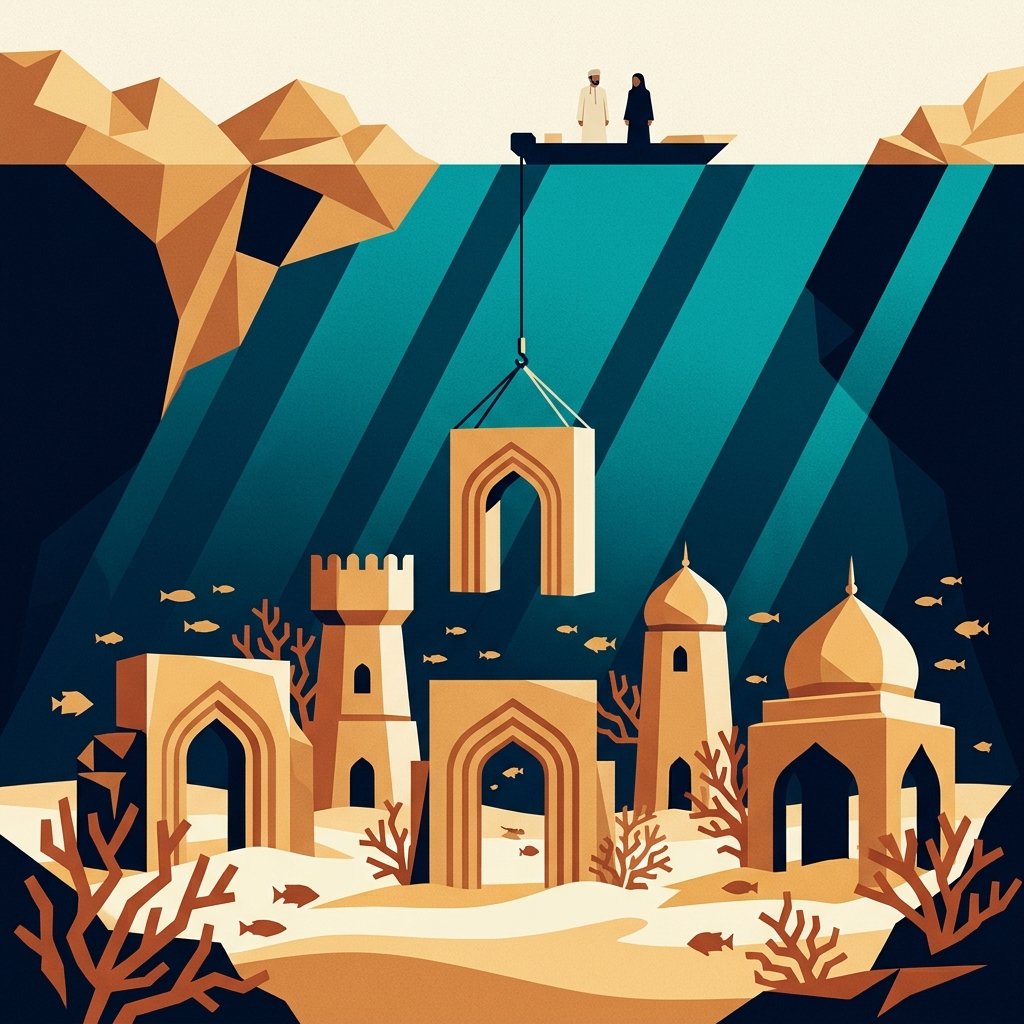
From the deck of a marine barge anchored off the limestone cliffs of the Daymaniyat Islands Nature Reserve, the sea looks calm and clear enough to read the bottom. When the crane cable begins to pay out, a ridged, sandstone-colored structure slips beneath the surface—sending up a brief collar of white bubbles before settling into the blue. Look closely at its stepped silhouette and arched openings as divers guide it toward the seabed, and a familiar outline emerges: the pointed arches and colonnades of Muscat architecture, reimagined for life underwater.
Through a collaboration between the Environment Authority and Omantel, and engineered by the Omani technology company Innotech, five 3D-printed architectural modules have been lowered into the reserve to form Oman’s first Underwater Museum. Rather than placing inert statues on the ocean floor, the team designed five habitat structures inspired by national landmarks: the Royal Opera House Muscat, Al Alam Palace, the Sultan Qaboos University Clock Tower, Al Sahwa Tower, and a fifth module bearing the emblem of the Environment Authority.
Architecture Designed for Coral and Currents
On land, those buildings are defined by clean geometry and sunlit stone. Underwater, their forms had to answer to a very different set of residents. Working alongside marine biology academics and reef specialists, engineers shaped each structure with hollow internal chambers, varied apertures, and rough, grooved exterior ridges.
Small damselfish and juvenile groupers need narrow crevices where larger predators cannot follow. Free-floating coral larvae need textured, pH-neutral surfaces where they can anchor and slowly build calcium carbonate skeletons over the coming seasons. Every arch and tower window was scaled to allow sea currents to pass through without scouring the seabed, turning recognizable Omani architectural forms into working shelter for marine life.
Built with an Omani-Made 3D Concrete Printer
One of the quiet milestones of the project happened onshore before the barge ever left port. Innotech printed the reef modules using a large-scale 3D concrete printer developed and manufactured locally in the Sultanate of Oman—the first machine of its kind built in the region.
To make sure the structures would nurture marine ecosystems rather than leach chemicals into the water, Innotech formulated a custom concrete mixture tailored specifically for 3D extrusion and long-term immersion in seawater. Several local small and medium enterprises holding the Riyada entrepreneurship card took part across the production chain, fabricating the internal structural frames, managing the multi-day printing runs, finishing the textured surfaces, and consulting on marine placement. International advisers were also brought in for specialized technical reviews, pairing global reef-design experience with Omani engineering.
A New Trail for Divers and Conservationists
Zahran bin Ahmed Al Abdulsalam, Director General of Nature Conservation at the Environment Authority, notes that the Underwater Museum reflects a practical shift in how Oman approaches marine protection: pairing new fabrication technology with natural habitat recovery. By creating stable artificial reef substrates near existing coral zones, the reserve can relieve pressure on fragile natural reefs that attract thousands of snorkelers and scuba divers each year.
According to Aisha bint Hamed Al Rahbi, Marine Biologist and Director of the Underwater Museum Project at the Environment Authority, the team’s work is only beginning now that the five structures rest on the seabed. Marine specialists will track the modules over the coming months, recording which fish species move into the chambers first and how quickly coral colonies and sponges begin clothing the printed stone. For divers descending into the quiet waters of the Daymaniyat Islands, the museum offers an unexpected sight: the familiar arches of Oman’s landmarks, slowly turning into living reef.
Organization Design Expert in the Oil & Gas sector, with a passion for visual storytelling and creative content. Alongside his professional work in organization design, he is a skilled videographer and visual content creator, combining strategic thinking with a strong eye for compelling visuals.