Oman’s Economy Demonstrates Strong Resilience Amid Regional Challenges as IMF Forecasts 4.5% Growth in 2026
Government debt declines to 30.4% of GDP, fiscal and external surpluses remain strong, and strategic logistics capabilities bolster Oman’s long-term economic prospects — though non-oil growth still lags.
By Waleed Al Maskari
Muscat, Sultanate of Oman | 10 November 2026
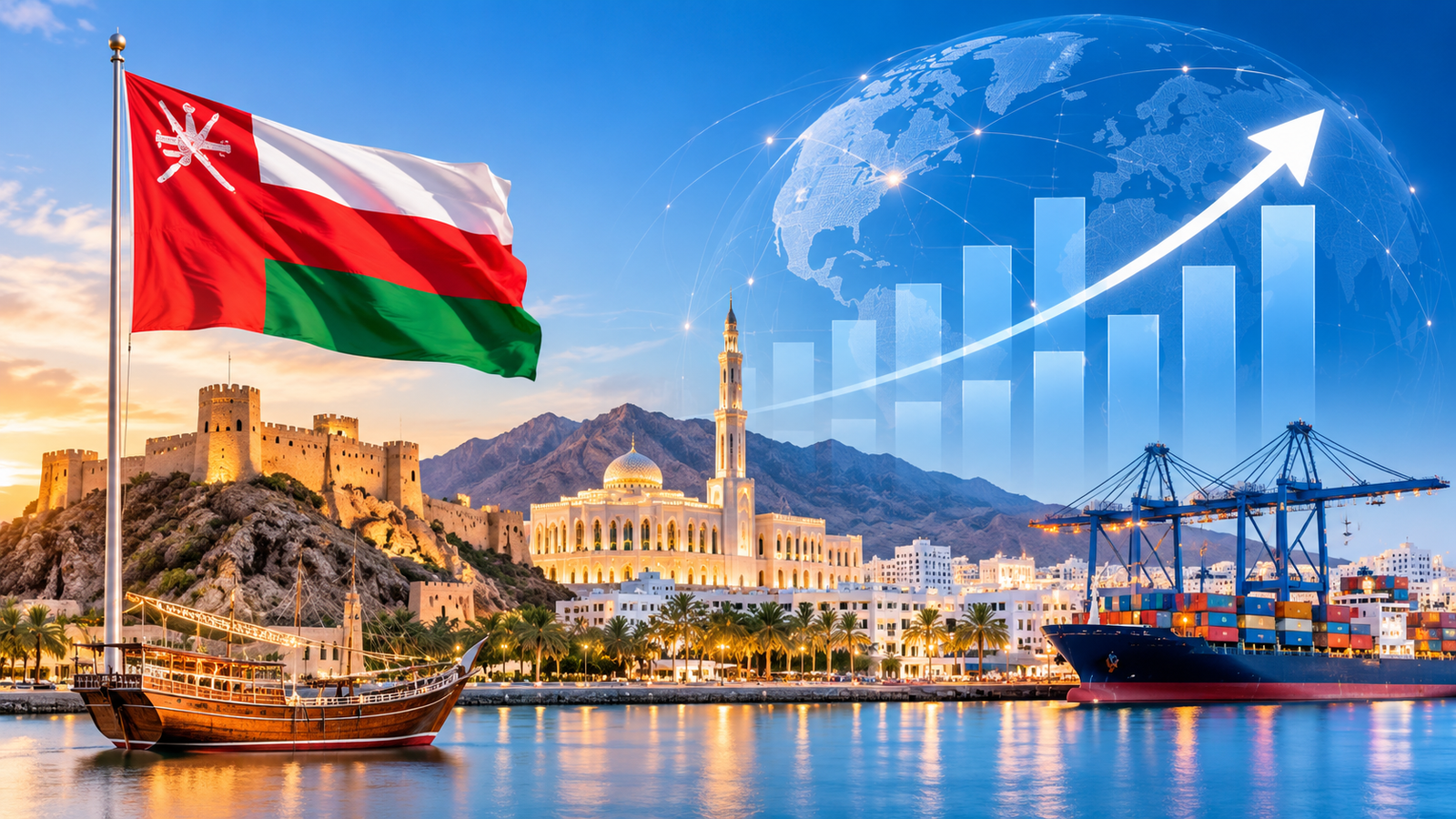
Amid mounting geopolitical tensions and economic uncertainty across the Middle East, the Sultanate of Oman continues to demonstrate remarkable economic stability, supported by prudent fiscal and monetary policies, sound fundamentals, resilient energy infrastructure, and a strategic geographical position that strengthens its role in regional and international trade.
The International Monetary Fund (IMF), in a statement issued on 9 November — the day after its 2026 Article IV Consultation mission concluded — gave a positive assessment of Oman’s economic performance, projecting real GDP growth of 4.5% in 2026, alongside continued fiscal and external surpluses and declining government debt.
The mission, led by Abdullah Al Hassan, visited Muscat from 25 October to 8 November 2026 to review the Sultanate’s economic performance and outlook.
Stronger Growth, Improving Expectations
Oman’s growth outlook has strengthened steadily throughout 2026. IMF projections have risen from 3.5% in April to 3.7% in June, 4.1% in October, and 4.5% in November — a one-percentage-point upward revision in seven months.
Real GDP expanded by 3.8% in the first half of 2026, driven primarily by stronger hydrocarbon activity, which offset weaker performance in construction, manufacturing, and tourism-related sectors. Non-hydrocarbon growth, by contrast, is projected at just 1.4% for 2026 — a reminder that the energy sector remains the engine of overall expansion and that diversification has yet to gain traction.
Fiscal Strength and Declining Debt
The IMF highlighted Oman’s continued fiscal strength, with the overall fiscal surplus reaching 1.9% of GDP in the first half of 2026. The Fund projects an average surplus of about 3.5% of GDP over 2026–2027.
Government debt fell to 30.4% of GDP by the end of June 2026, reflecting sustained fiscal discipline and strengthening the country’s capacity to absorb external shocks.
Oman’s external position also remains favourable, with the IMF forecasting a current account surplus of about 6.5% of GDP in 2026, up from an estimated 3.7% in the first half of the year.
These indicators give the government room to rebuild fiscal buffers, reduce financial vulnerabilities, and redirect resources towards productive investment and sustainable development.
Strategic Location and Logistics
The IMF identified the continued strength of Oman’s logistics sector and the resilience of its energy infrastructure as important factors supporting economic stability amid regional disruptions.
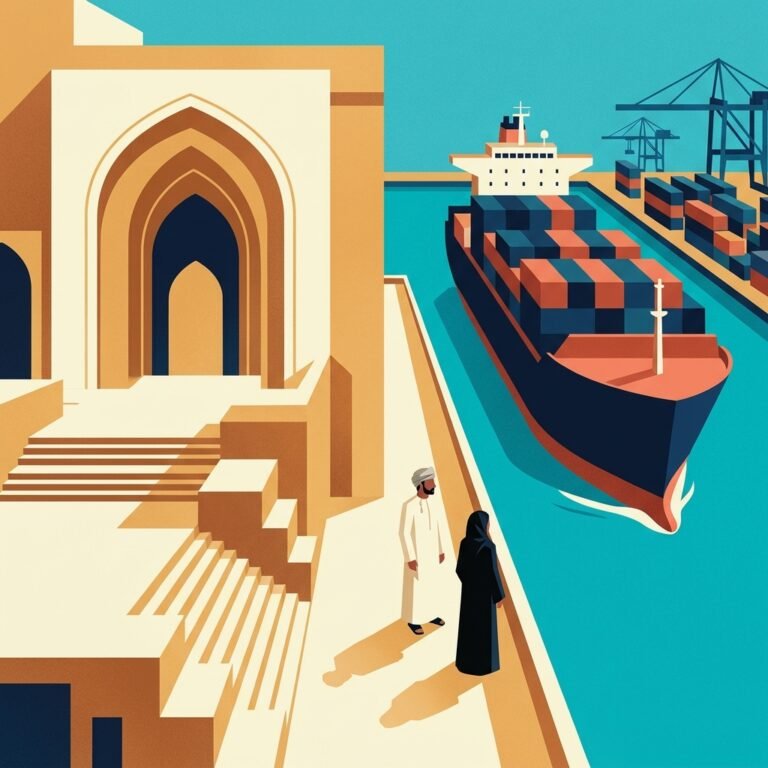
Oman’s position overlooking the Arabian Sea, the Sea of Oman, and the Indian Ocean offers significant advantages for international shipping, trade, and energy transport. Its major ports — Salalah, Duqm, and Sohar — play complementary roles in strengthening the country’s logistics and industrial capabilities.
Salalah and Duqm, located outside the Strait of Hormuz, provide strategically important maritime access and potential alternatives for international supply chains. Sohar serves as a major industrial and logistics hub. Together, these advantages position Oman to attract further investment in manufacturing, logistics, and trade while expanding its role as a regional gateway to global markets.
Banking Stability and Inflation
The IMF reaffirmed the strength of Oman’s banking sector, citing robust capital, liquidity, and profitability, alongside limited direct exposure to sectors most affected by regional conflict.
The Fund also considered the Omani rial’s exchange-rate peg an appropriate and credible monetary policy anchor, while encouraging continued improvements in monetary policy instruments and domestic financial markets.
Inflation, however, has risen from an average of 1% in 2025 to roughly 3% year-on-year during January–September 2026, driven mainly by higher food, transportation, and import costs. The IMF expects average inflation of 3% in 2026, gradually declining towards 2% over the medium term.
Vision 2040: Turning Stability into Sustainable Growth
Despite the positive outlook, the IMF emphasised the importance of accelerating structural reforms under Oman Vision 2040 — improving public investment efficiency, strengthening private-sector participation, advancing labour market reforms, expanding trade integration, and diversifying national income sources.
The gap between headline GDP growth and non-hydrocarbon expansion points to the central challenge: translating current fiscal and energy gains into broader, sustainable development. Priority areas include manufacturing, tourism, logistics, emerging industries, and other productive sectors capable of generating long-term employment.
The IMF also recommended directing exceptional oil revenues towards rebuilding fiscal buffers while preserving essential investment in diversification.
A Stronger Foundation
The IMF’s 2026 assessment presents an encouraging picture of Oman’s economic trajectory, demonstrating the Sultanate’s ability to maintain fiscal and monetary stability while sustaining growth despite regional and global uncertainty.
Yet the long-term significance of these achievements extends beyond favourable growth figures and fiscal surpluses. The central objective remains converting current gains into lasting productivity, stronger private-sector participation, diversified revenue streams, and high-quality employment.
As Oman advances towards Vision 2040, its combination of fiscal discipline, strategic geographical advantages, and continued reform offers a strong foundation for a more competitive, diversified, and resilient economy capable of navigating future global challenges.
Source: International Monetary Fund (IMF), 2026 Article IV Consultation Mission Concluding Statement for the Sultanate of Oman, 9 November 2026.
©️ 2026 Waleed Al Maskari